Sagunto steps up mosquito control in Grau Vell, the marjal and Almardà after October rains
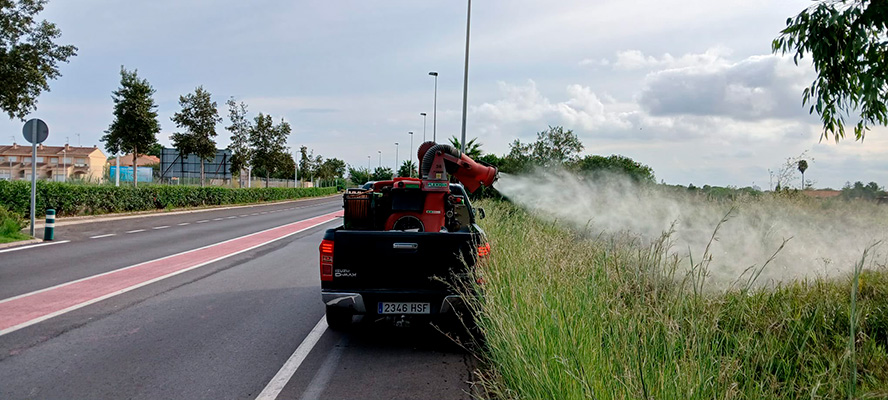
The health department is stepping up mosquito treatments in Sagunto, with morning and afternoon shifts, because of standing water left by the October rains. Residents can report breeding spots by email or the council app.
Anyone who spots standing water or an unusual number of mosquitoes in Sagunto can alert the council's health department at [email protected] or through the municipal app. Pest-control crews answer those reports alongside their scheduled work, which has been intensified in October 2026 because of the water left by the rains of recent weeks.
The councillor for health, Javier Timón, blames the rise in insects on the combination of rainfall and mild temperatures, which has helped mosquitoes spread across the whole municipality. The council has not announced an end date: it has reinforced the crews and will keep treating until the mosquito population returns to normal levels.
The fieldwork is carried out by Lokímica, the company contracted for pest control in Sagunto. Its operators regularly check the catalogued breeding spots and, since early October, inspections have found larval activity in several areas that are now being treated. In the marjal (wetland) areas, both larvae and adult mosquitoes have been seen. To respond, staff work morning and afternoon shifts until every breeding spot has been treated.
The operations combine two types of product. Larvicides act on the water so that larvae never reach adulthood; adulticides target mosquitoes that have already emerged. Using both at once curbs the current population and the one about to hatch.
The areas treated include the worst-affected zones: Grau Vell (historic port area), the marjal dels Moros, the mouth of the Palancia river, the north side of the river, the area around the hospital, Corinto, Malvarrosa and Almardà. For a resident of those neighbourhoods, the list shows where the crews are concentrated now and where it is worth reporting a breeding spot that has not been dealt with.
The marjal dels Moros, one of the zones named, is a wetland between the municipalities of Puçol and Sagunto, declared a ZEPA (special bird protection area) in 1996. Of the roughly 800 hectares bought by the Generalitat in 1995, about 300 are defined as wetland, which gives an idea of the area where water can remain after a spell of rain. The mouth of the Palancia, another treatment point, is not a true delta but an alluvial cone.
This is not the first time rain has driven up mosquito numbers in the municipality. According to elperiodic.com in September 2021, the council was already controlling and treating catalogued breeding spots, drains and rainwater channels after the rains, with heavy mosquito presence in Almardà, one of the areas on the 2026 list again.
At home, the health department recommends avoiding water build-up in containers, plant pots or gutters, which can act as breeding sites. Anyone who sees a breeding spot or notices more mosquitoes than usual can write to [email protected] or use the Sagunto council app.
According to the Sagunto City Council and elperiodic.com, with additional data from Wikipedia on the marjal dels Moros and the mouth of the Palancia, and from information published by elperiodic.com in 2021.