Canet d'en Berenguer: Court of Audit opens preliminary inquiry into red-light camera
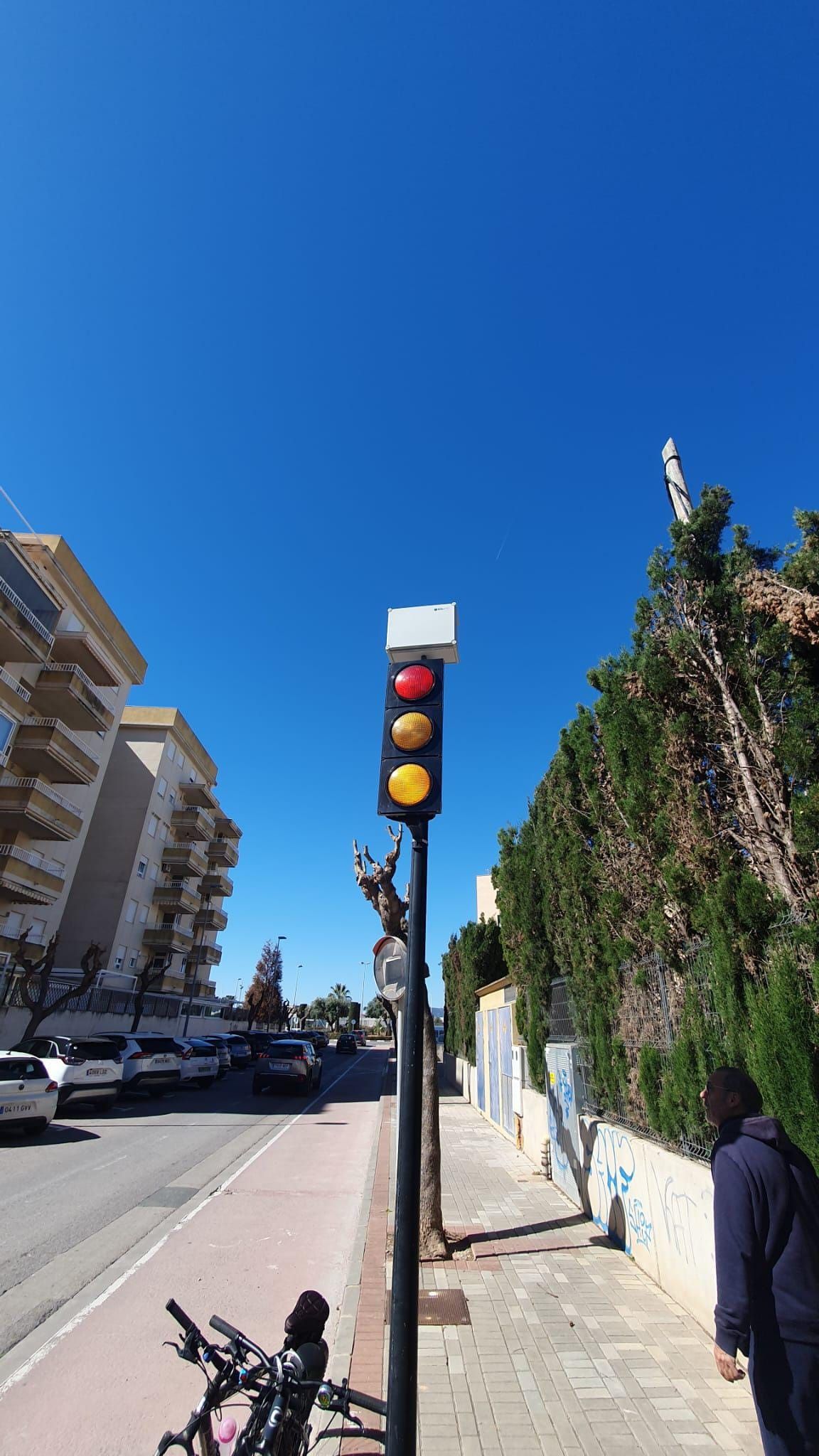
Spain's Court of Audit has opened a preliminary inquiry into the contract for the red-light camera in Canet d'en Berenguer, a Camp de Morvedre town next to Sagunto, after a referral from the anti-fraud agency.
The Court of Audit (Tribunal de Cuentas) has opened a preliminary inquiry into the minor contract the Canet d'en Berenguer town council used to handle evidence of traffic offences from the red-light camera on Joanot Martorell avenue. The step follows a referral from the Valencian Anti-Fraud Agency (AVAF). According to the documents seen by El Periódico de Aquí, this does not mean any liability or concrete financial loss to the town's finances has been established.
The preliminary file C134/2026, from the local public sector, reached the court's Trial Department no. 3 on 16 September. It stems from a letter the anti-fraud agency sent two days earlier with the resolution its director approved on 31 July. It concerns municipal file 3372/2024, the minor contract to provide evidence of traffic offences at the new camera on Joanot Martorell avenue. The department's court clerk, Guillermo Rodríguez-Villasante González, signed the file on 23 September 2026 and ordered it be communicated to the agency.
The court has sent a copy of the proceedings to the Public Prosecutor's Office and to the town council's legal representative. Both have a joint period of five days to comment on two options: appointing an investigating delegate to continue, or closing the case. This is therefore a preliminary stage, and only afterwards will it be clear whether there are grounds to investigate possible accounting liability. A little over three weeks have passed since the anti-fraud agency's letter of 14 September, and the next step depends on what the Public Prosecutor's Office and the council argue.
To understand the scope, it helps to know who is who. The Valencian Anti-Fraud Agency was created by a law the Valencian parliament (Corts Valencianes) passed on 10 November 2015 and began to operate in 2016. The Court of Audit, for its part, judges accounting liability, which requires serious intent, fault or negligence causing harm to public funds. That is why opening preliminary inquiries is not the same as declaring such liability.
The case goes back some time. According to El Periódico de Aquí on 7 August 2026, the anti-fraud agency then proposed sending the proceedings to the Public Prosecutor's Office and the Court of Audit, in a resolution dated 31 July 2026. The agency raised the possibility that the town lost economic rights by not processing penalty files or by their expiry, and that obligations above the limits of a minor contract were generated. The investigation began with complaints from Vox representatives in Canet d'en Berenguer and Sagunto, and ended with recommendations to the council: review its contracting procedures, strengthen the traceability of fines and complete the final settlement of the contract.
The controversy was not new. In December 2025, according to El Periódico de Aquí, the Vox groups in Sagunto and Canet reported at least 120 fines generated in one week that, in their version, had expired. Months earlier, in May 2025, elperiodic.com had reported that the camera would be replaced by a mobile speed radar, and that the system could mean a 200 euro fine and the loss of four licence points.
The town government maintains that the service was run lawfully and says it respects the actions of the anti-fraud agency, the prosecutor and the Court of Audit. It says the camera was not meant to punish drivers but to get them to slow down after neighbours complained about noise. It was announced with three warning signs, but according to the council the number of offenders ended up far higher than expected.
Precisely because few penalties were expected, the council used a minor contract with a limit of 18,150 euros, VAT included. In its version, what the contractor would have been owed for all the fines came to 19,125.47 euros, but the council will pay only the legal limit. The difference between the two figures is 975.47 euros. The council also explains that it removed the device early because speeds had dropped and because of an agreement with neighbours to look for other measures against noise. Hence its surprise at the idea that it may have lost revenue by not processing more fines.
Now the Court of Audit must decide, after hearing the parties, whether the proceedings go ahead with an investigating delegate or are closed.
According to El Periódico de Aquí, with additional data from elperiodic.com and from Wikipedia on the Valencian Anti-Fraud Agency and the Court of Audit.