Unidentified body found off Almardà coast, Guardia Civil investigates
An unidentified body missing its head, hands and feet was found floating off Almardà beach in Sagunto on Monday, and forensic experts are using DNA to try to identify the victim.
The body was spotted on Monday 28 September, when a recreational boat alerted authorities to a body floating around one nautical mile off the coast of Almardà, a beach in the municipality of Sagunto. The call came in at around 1pm.
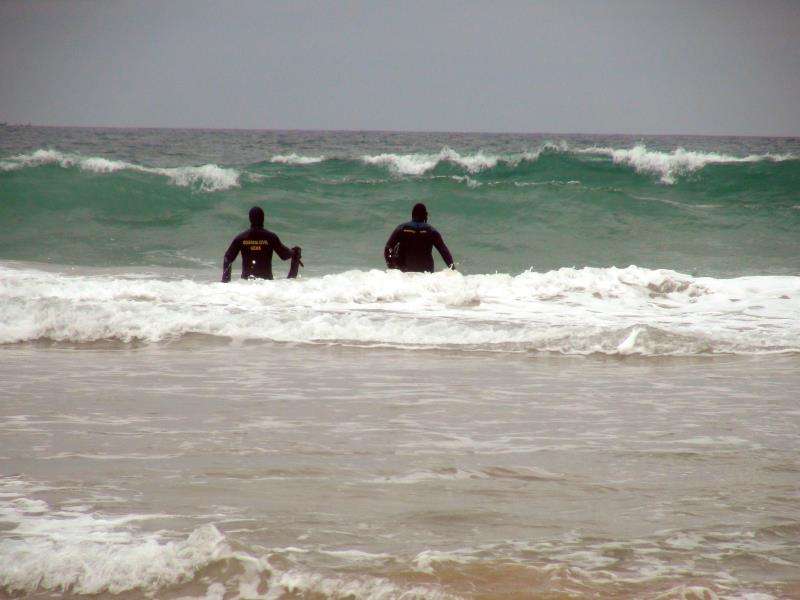
Officers from the Guardia Civil's Servicio Marítimo (the Spanish Civil Guard's maritime rescue unit) travelled to the location, recovered the remains and took them to their base at the Club Náutico de Valencia (Valencia's nautical club). The body, which had no head, hands or feet and was found without clothing, showed an advanced state of decomposition, a sign it had spent a long time in the water.
At the port facilities, a judicial commission took charge of the case, with forensic criminalistics specialists from the Guardia Civil and forensic doctors carrying out the initial inspection and photographic examination of the remains. This is standard procedure when an unidentified body is found at sea: it documents the state of the remains before they are moved and preserves any evidence useful for the later judicial investigation.
After a judge authorised the removal, the body was taken to Valencia's Institute of Legal Medicine, where forensic staff took samples for genetic analysis. The resulting DNA profile will be compared against databases of missing people, the standard method for identifying a body when fingerprints or other recognisable physical features, missing in this case, are not available. In Spain, this kind of match relies on the national genetic database of missing persons, which holds samples submitted both by relatives of missing people and by police forces themselves, allowing a newly obtained profile to be checked against thousands of existing records. There is no fixed timeframe for this process: a direct match can come back within days, but without any reference profile to compare against, identification can take weeks, or may never be resolved.
Almardà is one of Sagunto's coastal beaches, in the northern stretch of the municipality, popular with both swimmers and recreational boats, especially during the busiest months for boating. It was one of these boats that raised the alarm. It is one of the municipality's less crowded beaches, with a quieter, more family-oriented character than other stretches of the coast, though that does not stop it from seeing steady small-boat traffic during the summer months, the same kind of boating activity that led to the body being spotted this Monday.
Cases like this one, where an unidentified body turns up with no features that allow it to be recognised on sight, are handled in Spain as judicial proceedings for a death of unknown cause until the autopsy and further tests clarify what happened. While the identity remains unresolved, this kind of case typically proceeds with little public information released, which explains why few additional details have emerged so far. In cases like this, when a body shows no clear external signs of violence, investigators typically weigh several hypotheses in parallel, ranging from an accident or drowning to death from natural causes or, in the last resort, a criminal act, until the autopsy and other forensic tests narrow down which of these fits the findings.
The body's advanced decomposition, moreover, makes it harder in cases like this to pin down the exact time of death: forensic experts weigh factors such as water temperature, depth and local currents to narrow down an approximate window, a calculation that rarely produces an exact date.
For now, investigators have not determined how long the body was in the water or the cause of death. The case remains under judicial investigation, with authorities awaiting forensic test results to move forward with identification. According to El Periódico de Aquí.
← Back to today’s edition