PowerCo Sagunto: mayor welcomes 49% stake deal with China's Gotion
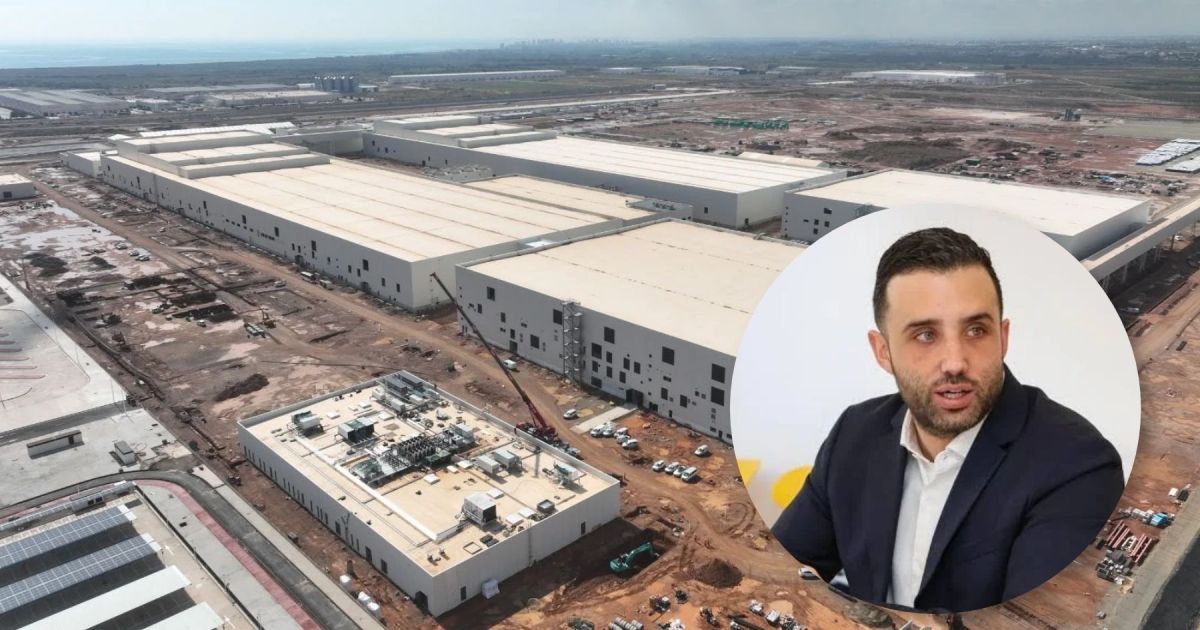
Mayor Darío Moreno backs Chinese firm Gotion joining the company that will run Sagunto's battery plant, a shift he says brings LFP technology better matched to real market demand.
With Gotion's entry still fresh, Sagunto's mayor wanted to make his reading of the move clear this week: he sees it as a safeguard for the plant's future, not a risk. Under the ownership split, PowerCo holds 51% of the new joint company and Gotion High-Tech the remaining 49%, in exchange for a 1.1 billion euro investment from the Chinese firm. Total spending on the project still tops 2.3 billion euros, spread across a first phase with two production blocks, a combined ceiling of 30 GWh a year and around 1,500 initial direct jobs.
For Moreno, what matters is not just how much money is coming in, but who is bringing it. He notes that the Asian firm ranks fifth among the world's largest battery makers, and stresses that Volkswagen keeping majority control of the company matters, in his view, because it guarantees the German parent company keeps setting the project's direction. That point carries more weight given that PowerCo, wholly owned by the Volkswagen Group since it was founded in 2022, is building two sister plants at the same time, one in Salzgitter (Germany) and another in St. Thomas (Canada), aiming to reach a combined 200 GWh of capacity across all three.
The mayor focuses above all on the technology shift the deal brings. The future plant will produce lithium iron phosphate (LFP) cells, a chemistry that, he argues, lets the project start out “more competitive” than the one designed years ago, when the market looked very different. This is not just talk: the iron-phosphorus-oxygen bond typical of LFP withstands short-circuits and temperature spikes better than cobalt-based formulas, and dropping cobalt also cuts manufacturing costs and lowers the environmental risks tied to mining and disposing of it.
Moreno places all this on a wider geopolitical board, one of industrial alliances that, he says, are shifting fast worldwide. He argues that resting the plant on a partnership between a major European firm and a leading Asian technology group brings stability and strengthens its competitive position, to the point that, in a future crisis, that anchor could act as a cushion for the local economy. Regional backing had already arrived a day earlier from the Generalitat: deputy regional president José Díez described the tie-up between the two companies as a step that makes the city a European reference point for electric mobility, though production is still due to start in 2027, as the same newspaper reporting the mayor's words today had reported the day before.
The mayor's argument does not stop at the factory. He insists the municipality cannot move forward “at two speeds”, with industry growing far faster than the services its residents need. He argues that more industry means more jobs, welfare and opportunities for the municipality, adding that the ultimate goal is for no resident to have to leave town to build a future. The council's own figures extend the project's reach well beyond this first phase's jobs: in January 2024, the local authority estimated around 3,000 direct and 12,000 indirect jobs for the completed project, while the Generalitat bought land next to the company's offices to build the future Battery Campus, with places to train 400 students who hope to later join the plant.
Moreno himself admits this push brings extra challenges, especially for public services, and lists measures already under way: the largest social spending line in the council's history, a strengthened police force, multi-year plans to maintain street surfaces, and urban planning designed to keep pace with growth. In return, he is calling on other levels of government not to lag behind on healthcare, education, inter-city transport and social housing, areas that fall outside council powers. This is not the first time the mayor has nurtured this industrial relationship beyond Sagunto: in June he visited the sister plant in Salzgitter to advance a sister-city partnership between the two towns, under a preliminary agreement signed in 2024. He closes his assessment with a line that sums up his reading of the project: the town “will be an industrial engine” for the whole Valencian Community and, he argues, for Spain as a whole too. Based on El Periódico de Aquí, with data from PowerCo, Wikipedia and Sagunto City Council.