Huts at IES Altos Hornos in Puerto de Sagunto: council wants two new schools and an institute
Sagunto's council rejected prefabricated classrooms as a permanent fix and asked the Generalitat for two new primary schools and a new secondary school, with five groups in favour and the PP abstaining.
The October plenary session of Sagunto City Council has approved a motion by the PSPV-PSOE (the Socialists), presented by Education councillor Raúl Palmero, rejecting prefabricated classrooms and temporary huts as a structural or permanent way to school the city's children. PSOE, Iniciativa Porteña, Vox, Compromís per Sagunt and EU-Unides Podem voted in favour. The Partido Popular abstained.
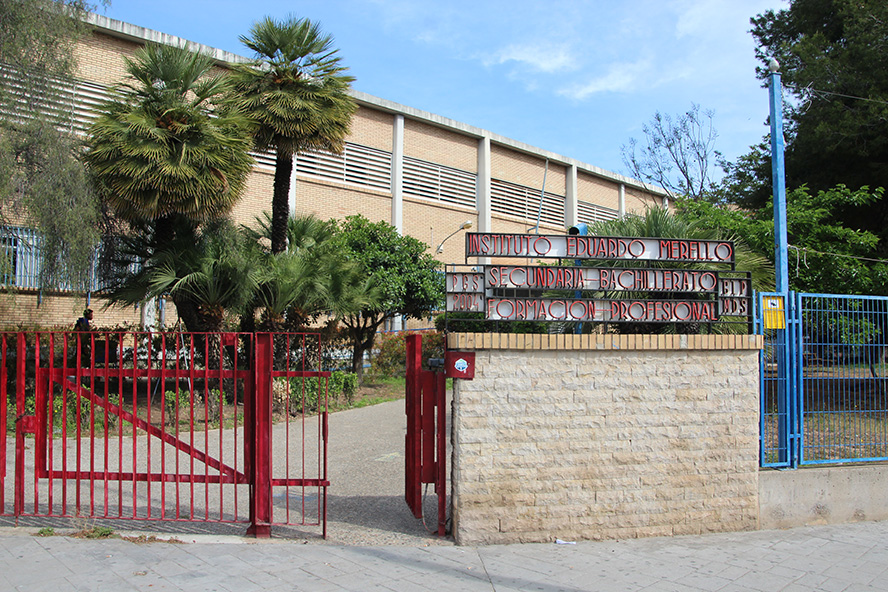
The text urges the Generalitat (the regional government) to do five things. First, to urgently start the administrative process to build two nursery and primary schools and one secondary and sixth-form school. Second, to guarantee that, while they stay in place, the prefabricated classrooms meet conditions of safety, habitability, air conditioning, accessibility, hygiene and thermal comfort. Third, to refurbish the CIPFP Eduardo Merello (a vocational training school), a project the motion describes as blocked since 2023. Fourth, to present a specific, public timetable for removing the modules. And fifth, to tie their removal to the opening of the permanent buildings.
The motion starts from a demographic diagnosis. For years Sagunto has seen significant population growth following the arrival of the PowerCo gigafactory (the Volkswagen battery plant) and other industrial investments, and education is one of the services feeling it most. According to the text, the education community and the council have for years warned the Generalitat, which is the competent authority, about the lack of places and overcrowded classrooms. From that lack of planning, it argues, came the huts installed at IES Altos Hornos in Puerto de Sagunto (the coastal district).
The numbers the motion uses are these. In July, the council's Education department drew up reports warning how few free places were left in schools before the admissions process had even finished. Last year the figure reached 850 enrolments, and this year there have been 341 extra enrolments between August and September, with a forecast of reaching a thousand over the school year. The text accepts that prefabricated modules can be an exceptional and strictly temporary solution, but not an answer to a structural need that has been repeatedly flagged.
Behind the request about the CIPFP Eduardo Merello lies a long file. The council asked the regional education ministry for a full refurbishment of the school on 15 June 2021, and the council agreed to process the delegation on 29 December 2021, almost five years ago. It runs through the Edificant Plan, the mechanism by which the Generalitat delegates works in public schools to town halls, which Sagunto joined by a council vote on 30 January 2018. That is why the council is the one awarding a contract for a Generalitat school. On 12 July 2023, an extraordinary session unanimously accepted the delegation to refurbish and extend the building as a specific vocational training centre, with 13,583,712.57 euros spread over four annual payments, of which 3,489,277.41 correspond to 2026 and 3,432,782.39 to 2027. The council handles the contract and pays whatever exceeds that amount.
The last secondary school created in the city is IES Número 5, which Decree 70/2023 of the Consell set up in the Generalitat building on calle Juan Molinero in Puerto de Sagunto, split off from the Jorge Juan and Eduardo Merello schools. It has capacity for 900 places in compulsory secondary and 280 in sixth form. According to Valencia Plaza in May 2023, the Consell authorised it with 1,180 places and 10.5 million euros within the Edificant plan. The documents consulted do not confirm that this school is the one known as IES Altos Hornos.
The debate had been hanging for weeks. According to El Periódico de Aquí on 1 October 2026, the plenary session planned for the previous week was suspended because of a red rain alert and the debate on education infrastructure was postponed. On that date, the PSPV, with Javier Raro, was complaining that the city is growing and its schools cannot take more. The stalling of the CIPFP was already a political complaint in April 2025: according to elperiodic.com, Compromís, with Maria Josep Picó, claimed the school was at a standstill and that the Conselleria had set aside only 1.8% of the total budget for that year. That is an accusation by an opposition group, not an official figure.
For families, the agreement changes nothing immediately. It is a request to the Generalitat, which decides where and when to build, and it sets no deadlines for any of the works. What stays on the table is the public timetable for removing the huts that the motion asks for, and the 2026 and 2027 payments of the Eduardo Merello project, which would be the first large amounts for the vocational school. According to aytosagunto.es and elperiodic.com, with data from the DOGV, El Periódico de Aquí and Valencia Plaza.