Regional council puts €4.16m upgrade of Sagunto-Petrés road out to tender
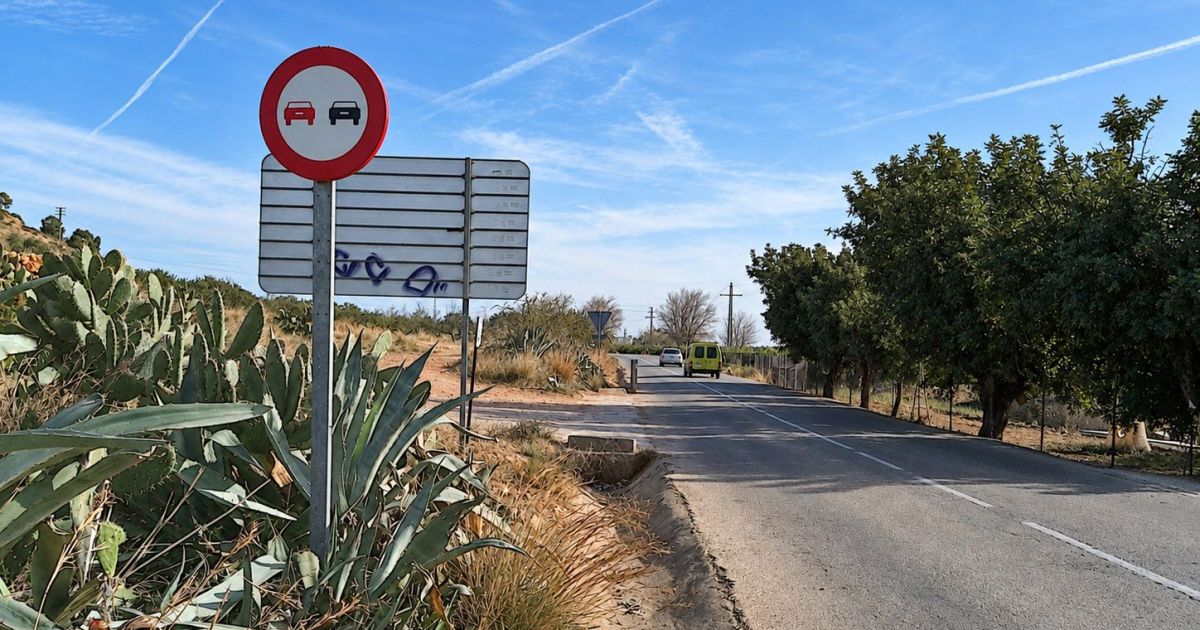
The Valencia provincial council (Diputació) has put out to tender a €4.16 million overhaul of the CV-324, the road linking Sagunto with Petrés, adding a segregated cycle-and-pedestrian lane and a new roundabout by the A-7 motorway.
Driving the CV-324 between Sagunto and Petrés has long been a source of local complaints: narrow lanes, poorly designed junctions, and cars, pedestrians and cyclists forced to share the same stretch of road. That is about to change. The Diputació de València (Valencia provincial council) has just put out to tender the renovation works for this road, backed by a €4.16 million budget, to be completed within ten months of being awarded.
The CV-324 is a provincially owned road, meaning its upkeep and improvements fall to the Diputació de València rather than Sagunto town hall or the regional Generalitat, which manage other roads in the municipality. That is why it is the provincial body, not Sagunto's own council, that is driving and directly funding works that nonetheless have a direct impact on the daily mobility of residents in both Petrés and Sagunto itself.
For Petrés families who walk their children to school every day or commute to Sagunto for work, the works should mean fewer risky manoeuvres and a proper walking route where none currently exists. The Diputació frames this project as part of a wider programme to upgrade district roads, one in which the safety of the most vulnerable road users — pedestrians and cyclists — now carries more weight than traffic capacity alone.
Although often seen as an extension of Sagunto, Petrés is in fact its own municipality with its own town hall, bordering Sagunto and Gilet, and sitting just over two kilometres from central Sagunto. That closeness makes the CV-324 its lifeline to the rest of the Camp de Morvedre district and to the A-23 and A-7 motorways — something Reme Mazzolari, the council's deputy vice-president, summed up by calling the road "the main access to Petrés".
The project tackles three separate fronts. First, the road surface: it will be widened to seven metres, flanked by one-metre shoulders, with curves corrected where visibility is currently poor. Second, the pavement and supporting infrastructure — drainage, signage, road markings and safety barriers — will be fully renewed. And third, the many paths, homes and facilities — including a school — that currently open directly onto the road with no proper layout will be brought under control.
The physical separation between the traffic lane and the walking-and-cycling path is central to the project: the 70-centimetre buffer means a simple painted kerb will not be the only barrier between passing traffic and people on foot or on a bike, a model increasingly common on Valencian district roads to reduce the risk of collisions on stretches with no pedestrian alternative.
Anyone walking or cycling along this stretch will, from now on, have space of their own: a three-metre path, kept apart from the asphalt by that same 70-centimetre buffer, linking Petrés with the Camí Vell de Terol without having to step into the traffic lane. That connection matters beyond this single stretch: the Camí Vell de Terol itself links to other rural paths in the area, so the new route would plug into a wider network of routes that today can only be covered by car or by walking alongside traffic. The Diputació has tendered work on that same path in parallel, so the two projects move forward together.
Putting the project out to tender does not mean machinery will move in straight away: this is the stage at which interested construction firms submit their bids, a step that on a project of this size usually takes several weeks before a contractor is chosen. Only once that happens will the ten-month execution period begin, meaning Petrés and Sagunto residents who rely on the CV-324 daily will have to keep living with the road as it is for now.
Tenders like this one form part of the multi-year road plans that Spanish provincial councils have been rolling out over the past decade, gradually renewing provincially owned roads section by section as traffic, pedestrian and cycling use, or the state of the road surface make it necessary. Adding a segregated cycle-and-pedestrian lane, as is now planned between Sagunto and Petrés, has become a de facto standard in this kind of upgrade, driven by demand from town halls themselves and by the road-safety policies promoted by both the Generalitat and the European Union.
Rounding off the plan will be a newly built roundabout next to the overpass above the A-7, designed to ease one of the road's current traffic bottlenecks.
According to El Periódico de Aquí, with additional background from Wikipedia on Petrés.