"El Club de las Luces Rotas": a Puerto de Sagunto novel about teens who feel invisible
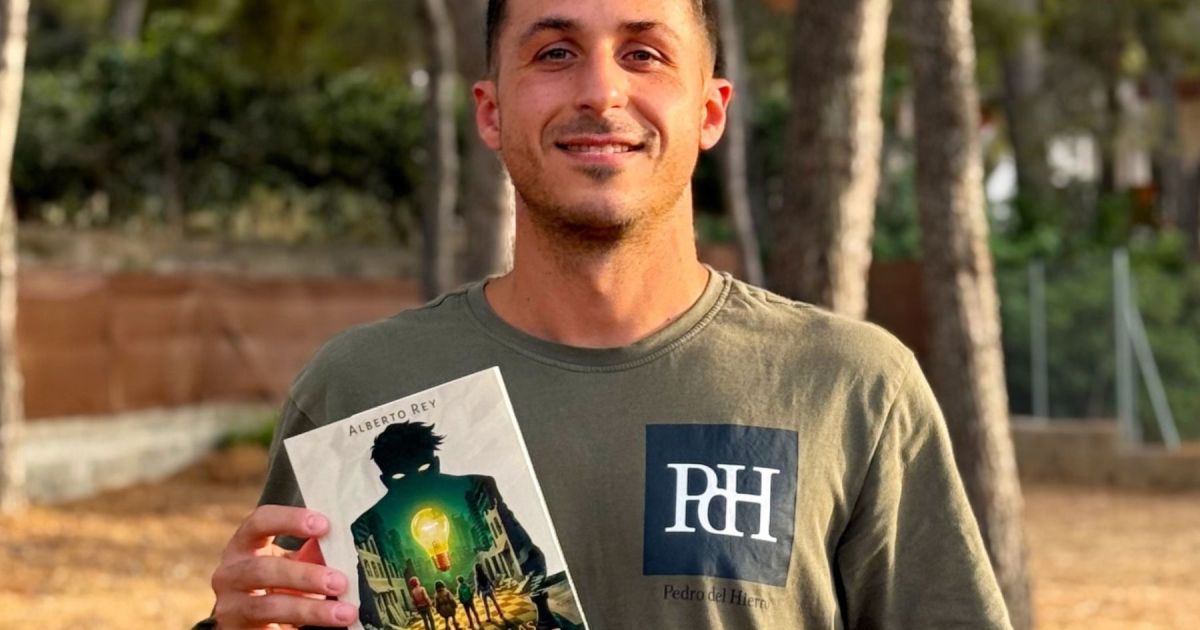
Writer Alberto Rey García has published "El Club de las Luces Rotas" (The Club of Broken Lights) in Puerto de Sagunto, young-adult fiction born from eight years as a leisure monitor, centred on the isolation many teenagers quietly live with.
Four teenagers who feel alone, a monitor afraid of losing his place, and a youth centre turned refuge: that, broadly, is the plot of El Club de las Luces Rotas (The Club of Broken Lights), the novel through which Puerto de Sagunto writer Alberto Rey García turns almost a decade of hands-on work with local kids into fiction. Published by Grupo Editorial Arcanas, this story for readers aged 12 and up tackles a subject that rarely makes headlines yet increasingly worries families and educators in the town: the quiet emotional distress many teenagers carry, which often shows up not as a visible problem but simply as the feeling of having no one to talk to.
Chiara, Erik, Martin and Eva are not isolated cases within the novel: according to the author, they represent profiles that any youth worker in the district would recognise without difficulty, from the kid who retreats into his phone screen to the teenage girl who avoids meeting up with classmates for fear of rejection. That recognisability is exactly what Rey Garcia is aiming for: he wants a teenage reader from Sagunto, Puerto de Sagunto or anywhere else in Camp de Morvedre to see themselves reflected in one of the four storylines without feeling singled out or labelled.
Chiara, Erik, Martín and Eva -the four names driving the plot- share the same starting point: each is carrying a different weight until their paths cross with Lucas, who runs a youth centre. None of them was looking for much at first, just someone willing to listen; without quite realising it, that corner becomes a space of their own, where they dare to open up about what they are going through and discover that the loneliness they felt was not as absolute as they thought. The twist comes through Lucas himself: the monitor is fighting his own battle, caught in a system that could push him out just as he starts to fear his time as an educator is running out. With that threat hanging over him, he sets himself a single goal before it is too late -helping the four of them learn to stand on their own, without giving up- and it is precisely that overlap of vulnerabilities, the adult's as much as the teenagers', that sets the novel apart from a standard coming-of-age story.
Behind the fictional plot lies a very real biography, and that is where the novel gains credibility for anyone familiar with the daily life of the region's youth centres. Rey García has spent more than eight years working as a municipal leisure monitor in Sagunto, running free-time activities for local young people; from that role he launched, among other projects, a youth reading club that showed him first-hand just how much it matters to have somewhere to talk without being judged. That experience, the author says, is the source of his belief that sometimes nobody needs to solve our problems for us -it is often enough to find somewhere to talk about them and realise we are not alone. Among his acknowledged influences are films such as To Sir, with Love and Dead Poets Society, stories in which the bond between an educator and a group of young people changes everyone involved.
Until now, Rey García's name had been linked to a very different kind of writing: Steamfield, his Victorian-London, steampunk-tinged detective trilogy -three books plus the spin-off El Maquinista- which has already reached around 10,000 readers and even travelled abroad, with a full translation published in Thailand. Swapping steam and gears for a neighbourhood secondary school and the worries of four present-day teenagers is, for the author, the real leap of this new stage -and something of a risk too: leaving behind a formula that was already working, to tell a story much closer to what he lives daily in his own job.
Rey Garcia himself has said he would like to bring the novel to a youth reading club in the town, a direct nod to the real experience that inspired the story.
Anyone wanting a copy can choose print or digital for 10 euros; the book runs to 104 pages, reached shops in early July, and is aimed mainly at teenage readers aged 12 to 20 and young-adult fiction fans, though its reflection on the need for spaces to be heard could easily interest parents and teachers across Camp de Morvedre too. According to El Periódico de Aquí.
← Back to today’s edition