Canet d'en Berenguer, a municipality next to Sagunto, disputes corruption costs
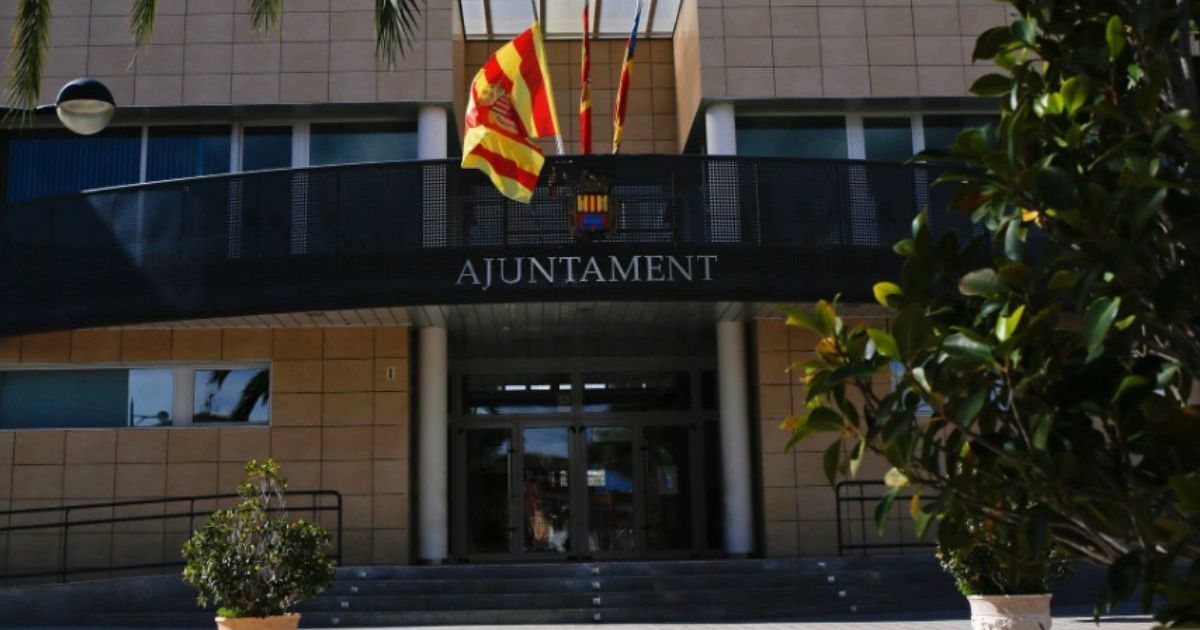
In Canet d'en Berenguer, a municipality next to Sagunto in the Camp de Morvedre district, the city council and a citizens' platform disagree on the real cost of five legal cases: between 5.6 and 19.4 million euros.
Five legal cases explain why Canet d'en Berenguer is now arguing over one number: how much corruption at the town hall has really cost. The council puts the financial weight of those five cases at just over 5.6 million euros; the Platform of People Affected by Corruption, the group that made the cases public, raises it to between 18.4 and 19.4 million euros once estimates and open risks are added in. The rest of the Camp de Morvedre district, shared with Sagunto, is watching closely: the case will set a pattern for how such inherited costs get accounted for in the area.
The gap between the two figures comes down to what gets counted. Money already paid out, final court rulings, accounting provisions for risks that have not happened yet, and plain estimates of future costs are not the same thing, even though the group's document adds them all together. The council uses that mix of categories to push back against the overall claim.
Behind the dispute lies a long legal history: that of former municipal secretary José Antonio Sancho Sempere, already convicted twice by the courts over offences committed during his time in office. The first conviction came in January 2016, when the Valencia Provincial Court sentenced him to two years in prison for bribery. The second followed later, in April 2021, when the Supreme Court upheld another ruling against him for prevarication (misuse of public office). Both form part of a wider set of cases open against him since the year 2000, spanning a quarter of a century, according to a report by El Periódico de Aquí (a local news outlet) in October 2025. Spain's Civil Guard also looked into assets accumulated by Sancho Sempere through its unit specialised in economic and urban planning crimes; that police report, now filed within a criminal case that remains open, estimates he may have pocketed around 2.9 million euros in council funds.
Two of the five cases already have a figure fixed by a court ruling. The first is the Mas Camarena case, valued at 2.2 million euros after the courts cancelled the handover of public land to a private school. The second is Vitas de Amarre, a beachside plot earmarked for a hotel: the Superior Court of Justice of the Valencian Community (the region's highest court, TSJCV) set compensation here at 276,375.55 euros, plus interest. That second dispute traces back largely to Spain's Coastal Law, which sets aside a protected public strip 100 metres inland from the shoreline; building within that strip tends to end up in court.
The two remaining cases are open to different readings. One is the Cantó swimming pool, whose licence was annulled: the platform puts the demolition risk at 1 million euros, while the council leans on a ruling that places that cost, estimated by the affected residents themselves at around 700,000 euros, on the housing development's community, not on public funds. The other is the Valencian Paella Institute, to which the group attributes more than 2 million euros built up through a failed business case, lawsuits and a debt settlement.
At 151,735.52 euros, the fifth case is the smallest: invoices issued by the Valencian Association of Lawyers between 2007 and 2011. Their existence alone proves no wrongdoing, which is exactly what the platform wants clarified, by asking for access to the contracts and the work behind them. As the case with the least legal history of the five, the council has said little about it beyond pointing to its archive records.
For the council, the platform's overall estimate is itself unreliable, since it has shifted repeatedly in a few months: 8 million euros before summer, 15 million afterwards, and, in its latest message, between 18.4 and 19.4 million. As an example, it cites an old water treatment plant project whose attributed cost jumped from 5 to 7 million euros in a short time when, council sources say, the real expense was limited to court costs. That back and forth, they argue, weakens the combined figure, though it does not disprove each case taken on its own.
The council's response goes beyond the numbers: it also questions who is behind the complaints. According to the council, the platform has no legal status, is not registered, and may be the work of a single person using a pseudonym. Council sources name Iñaky Sos Salvador as the group's alleged spokesperson and say the council's doors are open to meet him; without evidence to back it up, they also suggest a link to earlier corruption cases in the town, an accusation that remains unconfirmed.
The platform wants an independent audit that clarifies what has been paid, what remains open, and who should be held responsible; the council turns the request around and says the platform itself should be audited. Vitas de Amarre is already under an official review by the Tribunal de Cuentas (Spain's top public spending watchdog), separate from the platform's demand; according to El Periódico de Aquí in May 2026, that case sat frozen for eleven years until an official review restarted it on 4 October 2018. The Mas Camarena case, according to the same outlet in April 2026, was settled that year after the original 23 million euro claim from rival school El Plantío was reduced through an agreement to the 2.2 million euros finally paid, after the Supreme Court confirmed that handing over 9,000 square metres of public land had broken the terms of the original tender.
Until each case is broken down into what has already been paid and what is still just a provision or risk estimate, the real cost of corruption in Canet d'en Berenguer will stay an open question. According to El Periódico de Aquí, with additional data from Wikipedia and Spain's Official State Gazette, the Boletín Oficial del Estado.