PowerCo Sagunto: Volkswagen and Gotion sign the deal, delay start to 2027
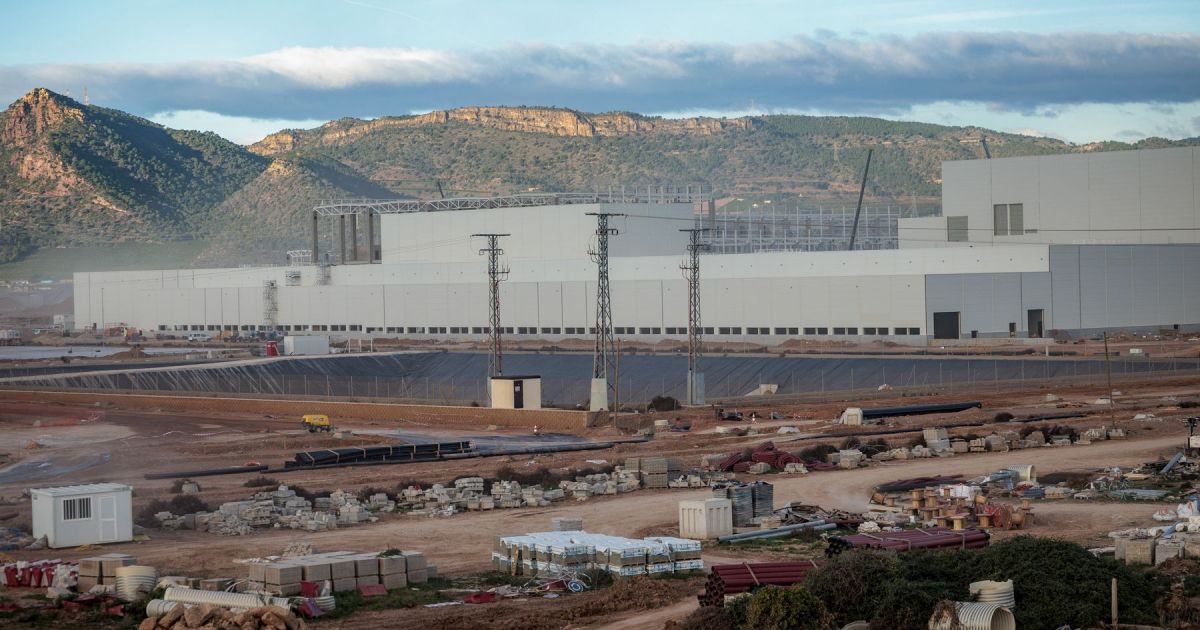
PowerCo and Chinese battery maker Gotion have signed the shareholder agreement for the Parc Sagunt gigafactory: 51% for the Volkswagen subsidiary and 49% for Gotion, with production now delayed to 2027.
For Parc Sagunt, the industrial estate where PowerCo is building its battery plant, Monday, 28 September brought confirmation of something that had been circulating among project watchers for weeks: Chinese manufacturer Gotion is now part of the plant's ownership. A joint statement from PowerCo and Gotion High-Tech, issued this afternoon after industry sources revealed the deal earlier in the day, sets out the split in concrete figures: 51% for the Volkswagen subsidiary, which keeps control of governance, strategic direction and operational oversight of the project, and 49% for the Chinese company, which paid 1,100 million euros for its share.
The total amount does not change from what was already known: more than 2,300 million euros are committed to the current phase, already under way, and the goal of adding more than 1,500 direct jobs in this first stage, covering the first two production blocks, still stands. The company also argues that bringing in Gotion boosts the plant's technological capacity: combined production will start at around 30 gigawatt hours a year, a figure PowerCo says will make Sagunt one of Europe's major lithium iron phosphate (LFP) cell factories.
The timeline, however, remains the shakiest part of the project. Three different dates have now been floated since the project was first announced: first this September, then the end of the year, and now 2027, still without a specific month. PowerCo blames the delay on adjustments to its industrial roadmap, meant to let the plant start with a better technical setup and greater scale from day one of production. Construction, meanwhile, has not stopped: clean rooms, the spaces that need extremely tight humidity and particle control to manufacture batteries safely and to a high standard, are being installed right now. Compared with other lithium-ion chemistries, the LFP technology coming out of Sagunt offers an extra advantage: greater chemical and thermal stability, which lowers the risk of a fire if misused, and a slower loss of capacity over the years, meaning batteries that stay in good condition longer.
Between 40% and 65% of all European battery demand could be LFP by 2030, according to market forecasts cited by PowerCo, based on the chemistry's competitiveness, safety, durability and suitability for high-volume electric vehicles. That is exactly the problem Volkswagen, PowerCo and Gotion say they want to solve with Sagunt: almost all the LFP cells used in Europe today are made in China. The Valencian plant is presented, in that context, as the piece meant to support a competitive European production base for a technology the three companies consider strategic, with cells made specifically for the European market.
Sagunt is far from the full scope of Monday's deal. Trade outlet electrive.com reported the same day that the agreement is part of a larger package: three joint ventures between the Volkswagen Group and Gotion worth a combined 3,220 million euros, of which 2,260 million go to the Valencian project and around 480 million each to the other two, one in Slovakia focused on cells and another in Morocco focused on cathode materials. The ownership split is reversed in those last two: there, Gotion controls 51% and Volkswagen holds 49%, a formula trade press reads as a kind of trade-off, China's entry into Sagunt in exchange for Volkswagen gaining ground in those two markets. As part of the same deal, the German group also plans to reduce the stake it holds in Gotion within China, where it has been a shareholder since 2020.
Founded in 2022 as Volkswagen Group's battery subsidiary, PowerCo is headquartered in Salzgitter, Germany. Sagunt is not its only major project: the company is also building gigafactories in Salzgitter itself and in St. Thomas, Canada, and together the three add up to a combined capacity of up to 200 gigawatt hours, a figure that makes clear the Valencian plant is part of a much wider industrial network rather than a stand-alone site.
Executives from both companies struck a similar tone. Volkswagen's Thomas Schmall, the board member for Technology and chair of PowerCo's Supervisory Board, framed the deal as guaranteeing access to technology that is key for electric mobility, adding that, in his view, no other European carmaker covers the entire battery value chain on its own. Frank Blome, who heads PowerCo, spoke of a collaboration that strengthens supply chain resilience and speeds up the plant's industrialisation, built on a partner the company has already worked with for years. Li Zhen, chairman of Gotion High-Tech, summed up the relationship in one image: six years of working side by side that now lead into what he called a shared future within a global strategic partnership.
The Gotion announcement did not arrive alone. According to a report by ultimahora.es, PowerCo used the same day to confirm that a Master's degree in Battery Technologies, developed with the University of Valencia and the Polytechnic University of Valencia, starts in early October, along with a new advanced professional certificate in Laboratory Analysis and Quality Control for battery manufacturing, which has already begun. For day-to-day life in Sagunto, bringing in this second major partner does not, for now, change the hiring timeline or the priorities the City Council had already promised local residents. It does, however, add another international player, with factories and projects spread across Asia, Europe, North America and, from now on, North Africa, to the industrial map still taking shape around Parc Sagunt.
According to El Periódico de Aquí, with data from PowerCo, electrive.com, ultimahora.es and Wikipedia.