Sagunto's PP demands details on local hiring at PowerCo gigafactory
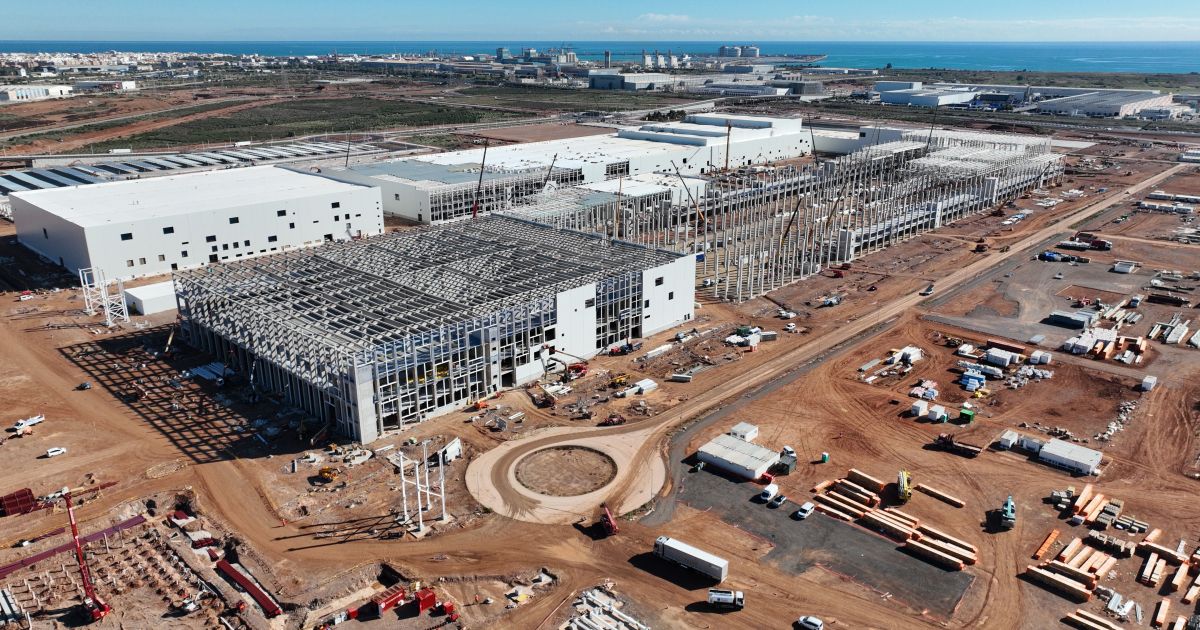
The PP opposition party has asked Sagunto's City Council, in a committee session, what measures ensure local hiring at the PowerCo battery gigafactory, whose stalled recruitment process has restarted with over 8,000 applications.
The debate over who benefits from the jobs created by PowerCo's battery gigafactory (an electric-vehicle battery plant) has returned to local politics in Sagunto. The PP, the main opposition party, has asked for explanations in a council committee about what measures the City Council applies so that registered local residents get priority access to the new jobs, after the company restarted a hiring process that had been stalled for months and now counts more than 8,000 applications.
PP spokesperson Ximo Catalán argues that the plant's arrival should translate into real opportunities for local residents and wants to know how the City Council takes part in the selection process. The party's proposals include strengthening municipal job-placement support, adapting training to the profiles the factory needs, and setting up cooperation mechanisms with PowerCo that give priority to qualified local candidates.
The local government replies that an agreement with the company does exist, even if it is not a formal contract, and that contact between both sides is constant. The rule applied is that when two candidates reach the final stage of a selection process with an equivalent profile, preference goes to the one from Sagunto. What does not exist, the City Council clarifies, is any commitment that sets a minimum number of local workers the company must hire — a distinction that matters a great deal in this debate.
This cooperation framework is not new: according to aytosagunto.es, the city's official news site, in October 2025 the agreement was signed by mayor Darío Moreno and economic development councillor Raúl Palmero on behalf of the City Council, alongside PowerCo's finance chief Javier Rivera and HR chief Ricardo Guerrero. The measures agreed then included advertising PowerCo's job openings through the municipal Job Portal and social media, as well as the company's presence at job fairs organised by the City Council.
The pace of hiring, however, has been slower than expected. According to okdiario.com, in February 2026 PowerCo's job pool had 3,200 registered candidates for just 500 operator positions, of which only 30 had been hired, following in-person selection sessions in groups of up to twelve people lasting around four hours. That changed this month: according to somoselectricos.com, on 23 September 2026 the company resumed hiring in order to bring on its first new staff in early November, with salaries ranging from €26,000 to €29,000 gross per year.
The scale of the project explains the volume of applications. PowerCo's plant in Sagunto represents an investment of more than €3 billion, and the company expects to create more than 3,000 direct jobs once it reaches full capacity, according to figures published on its own careers site. Current job openings, such as production operator roles, require mid- or higher-level vocational training (FP) in mechanics, electricity or chemistry, plus one to three years of industrial experience, and come with permanent contracts under the chemical industry's collective bargaining agreement.
The City Council argues that the real issue is not only how many local residents can get hired, but how many already have the qualifications the factory needs. Industrial trades in Sagunto show very low unemployment, and the profiles of those currently out of work do not always match what PowerCo is looking for — staff for production, maintenance, logistics, quality control and laboratory work. Business groups also warn that prioritising where a candidate is from over their qualifications could exclude better-trained professionals from neighbouring municipalities.
That is why the City Council sees the medium-term solution in vocational training. It is pushing to renovate the Eduardo Merello technical school into a flagship vocational training (FP) centre — a full renovation that the regional Education Department has delegated to the City Council itself and which will be funded with €13.5 million through the Edificant plan, the Valencian regional programme for school building and renovation. The school, which already operates as an integrated vocational training centre, currently teaches Electricity and Electronics, Mechanical Manufacturing, and Installation and Maintenance — specialities close to what the gigafactory needs. The City Council is also asking the regional government to build a new secondary school in the municipality.
According to El Periódico de Aquí, with additional data from PowerCo careers, aytosagunto.es, okdiario.com, somoselectricos.com and the Eduardo Merello vocational school.