A Camp de Morvedre school brings democratic memory into its classrooms
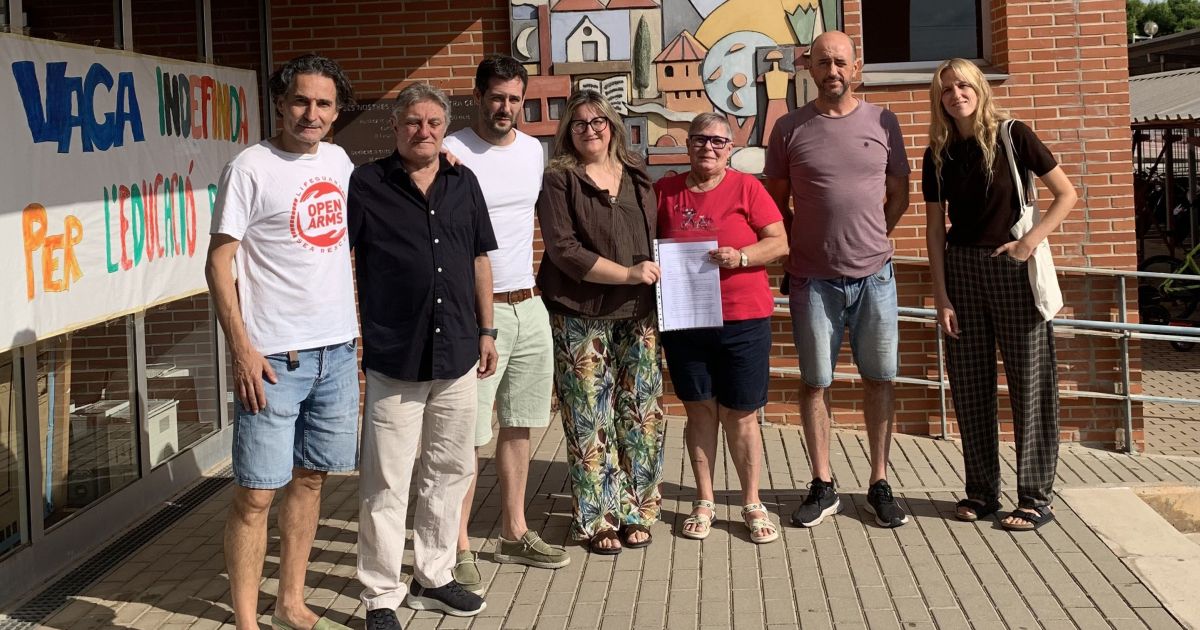
IES La Vall de Segó, a secondary school in Benifairó (Camp de Morvedre district), has signed an agreement to bring the memory of Spain's democratic history into its classrooms, with plans to extend it to other schools in the district, including Sagunto.
IES La Vall de Segó, a secondary school in Benifairó de les Valls, formalised an agreement on 18 September with the Associació de Memòria Històrica El Molí de Quart de les Valls (a local historical-memory association) to permanently build the study of Spain's democratic memory into the school's educational project. The initiative starts in Camp de Morvedre, the same district (comarca) that includes Sagunto, and from the outset its organisers describe a district-wide ambition: to extend the model to other schools in the area and build a network of schools focused on democratic memory that shares resources and experience.
The historical period covered by the agreement runs from the Second Spanish Republic to the Democratic Transition, with classroom-adapted activities: workshops and learning sessions on air-raid shelters, concentration camps and mass graves, plus a short-story contest open to students. El Molí will provide the school with teaching materials -books, documentaries and plays- so the school does not have to build content from scratch.
Beyond the classroom, the programme includes visits to sites linked to the region's historical memory, and to other parts of the Valencian Community: the air-raid shelter of Quart de les Valls, the bunkers and trenches of Almenara, and a stretch of the so-called Línea XYZ (XYZ Line). This defensive fortification system, also known as the Línea Matallana, was built in 1938 by Republican troops during the Spanish Civil War, and one of its sections runs precisely through the Almenara area, within Camp de Morvedre itself. Students will also visit the paredassa and cemetery of Paterna, and the former concentration camps of Faura, Quart, Quartell, Estivella and Portaceli, alongside memory-themed routes through Quart de les Valls and other points in the district.
One of the most symbolically significant strands of the programme is the inclusion of oral testimony from exiled and repressed individuals and victims' relatives, aimed at helping students connect academic content with direct personal experience. Students will also take part in recovering and researching local heritage tied to democratic memory, with El Molí's short-story contest as one way to get involved.
The agreement is not happening in a legal vacuum: it fits within Spain's Ley 20/2022 de Memoria Democrática (2022 Democratic Memory Law), whose Article 44 requires the Spanish education system to include knowledge of democratic history and memory among its educational aims, alongside the defence of democratic values and freedoms. It is this legal provision that allows schools like IES La Vall de Segó to build this kind of content into their educational project on a stable, ongoing basis, rather than relying on the initiative of an individual teacher.
The agreement also plans annual conferences on democratic memory at the school itself, serving as a gathering point to explore different aspects of recent history and the preservation of collective memory. Camp de Morvedre played a significant role in the Republican rearguard during the Civil War, with defensive lines, labour camps and shelters, and the initiative is an opportunity to document and pass on that heritage, which until now has depended largely on memory associations like El Molí, without a stable educational channel.
Although the agreement originates in Benifairó, its district-wide ambition is directly relevant to schools in Sagunto: if the network expands as its promoters plan, the working model -agreements with memory associations, shared teaching materials and guided visits to memory sites- could reach schools in Sagunto in coming school years, adding more Camp de Morvedre schools to this growing Valencian network of democratic-memory education. According to El Periódico de Aquí, with additional background from Wikipedia on the Línea XYZ and Spain's Democratic Memory Law.