Traffic returns to normal on the A-7 in Sagunto after morning crash
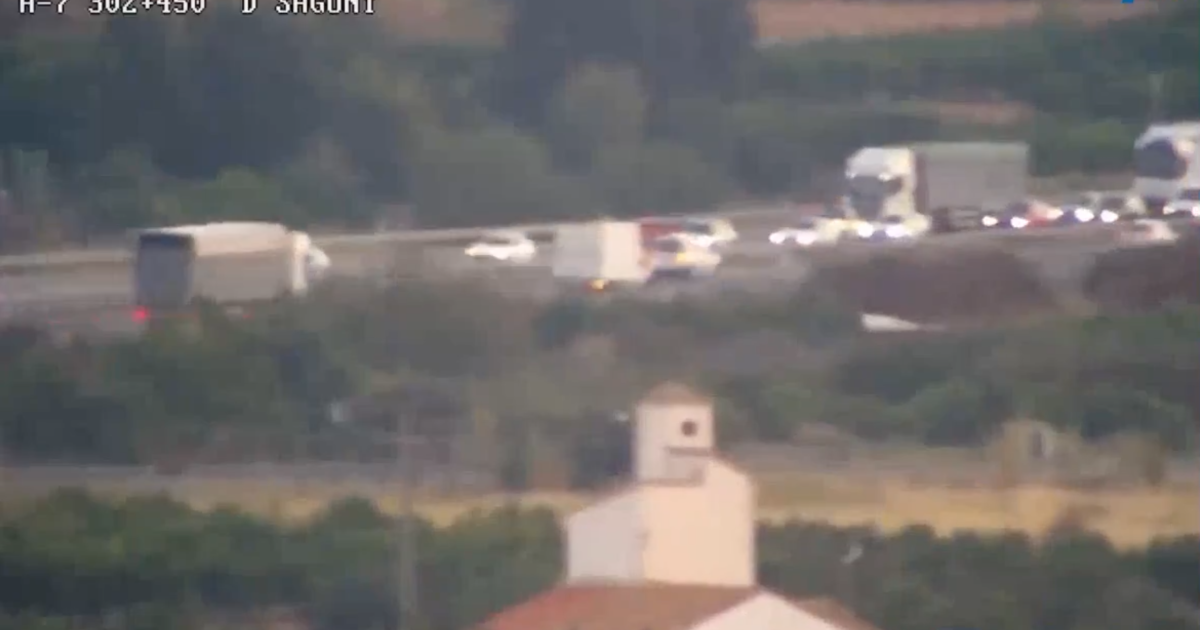
An accident this morning at kilometre 301 of the A-7 motorway in Sagunto, heading towards Valencia, caused more than two kilometres of tailbacks before traffic returned to normal, according to Spain's traffic authority DGT.
Spain's traffic authority, the DGT (Dirección General de Tráfico), confirmed this morning that traffic has returned to normal on the A-7 motorway in Sagunto, following an accident at kilometre 301, heading towards Valencia city. The crash caused more than two kilometres of tailbacks before the road was cleared and traffic picked back up to its usual pace by mid-morning.
The DGT's official report only confirmed the incident and its resolution, without further details on how many vehicles were involved. That is the standard format for this kind of traffic alert: the priority is to warn drivers about the delay while it lasts and confirm as soon as possible when the road is clear again, rather than reconstruct exactly what happened.
This stretch of the A-7 is part of the Mediterranean Corridor and links the industrial area of Sagunto and Puerto de Sagunto with metropolitan Valencia, so it carries heavy traffic, both private vehicles and freight linked to the district's port and industrial activity. A closure or a long delay on this road directly affects people who commute daily between Sagunto and Valencia for work, as well as freight traffic in and out of the industrial estates of Camp de Morvedre.
A tailback of more than two kilometres on a stretch like this, even if cleared within a few hours, has a knock-on effect on the surrounding road network: drivers caught up in the accident may have diverted onto secondary roads, temporarily increasing traffic on those alternative routes while the A-7 was closed or restricted.
For incidents like this, the DGT's standard advice is to check its website or official app before setting off, especially during peak traffic hours on the A-7 near Sagunto, where even a small incident can quickly turn into tailbacks of several kilometres. According to Spain's Dirección General de Tráfico (DGT, national traffic authority), as reported by El Periódico de Aquí.
← Back to today’s edition