Sagunto trains 15 women as school support staff with EU funding
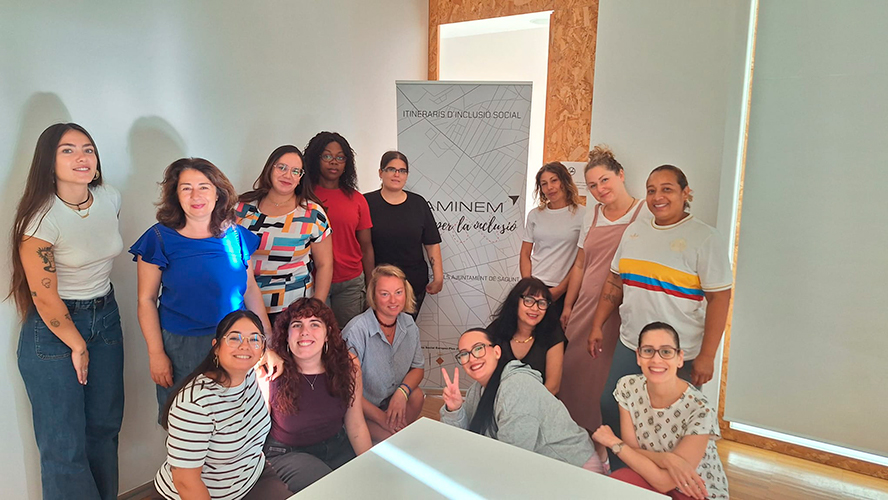
Sagunto's Social Services Department has launched a 166-hour course to train fifteen women as multi-skilled school monitors, funded by EU money and running until December.
Fifteen women in Sagunto started a course this week designed to open a path into school-related jobs: training as multi-skilled school monitors (monitoras escolares polivalentes), run by the Social Services Department through the municipal Itinerarios de Inclusión Social (Pathways to Social Inclusion) programme. It is a free course that will run until December, with a total of 166 hours of hands-on training.
The group will cover four areas that often overlap in a school's daily routine: school canteen supervision, school transport, first aid, and safe food handling with allergen management. The course is not just theory: the material is delivered through practical case studies, simulations, role-play, and group exercises, so participants can apply what they learn to real situations they will later face in a school.
The programme mainly targets women with family responsibilities who lack a support network to balance family and work life, a barrier that in practice makes it harder to get or keep a job. Social Services Councillor Nuria Carbó said the Council wants to give the fifteen participants a concrete opportunity to keep training and take a step towards the job market, with special attention to those who find it hardest to juggle both sides of their lives.
Funding comes through the European Social Fund Plus (FSE+) Comunidad Valenciana 2021-2027 programme, one of the European Union's main tools for employment and social inclusion policy. It is a fairly recent fund, created by merging the former European Social Fund with the Fund for European Aid to the Most Deprived (FEAD) and the Employment and Social Innovation programme (EaSI). For the whole 2021-2027 period, it has a combined EU-wide budget of €88 billion, aimed at strengthening employment, training and social cohesion across member states.
This EU funding route lets Sagunto City Council run courses like this one without covering the full cost from the municipal budget, which matters especially for programmes aimed at groups who face more barriers to employment. The school-monitor course joins other initiatives under the Itinerarios de Inclusión Social programme, which more broadly supports job-market integration and personal independence among Sagunto residents facing the biggest starting obstacles.
Beyond the training itself, the Department's stated goal is for the fifteen women to be able to apply, from January onwards, for jobs in school canteens, school transport routes or support services at schools across the municipality and the wider district, now backed by a formal qualification they did not previously have. It is a sector with steady demand every school year, and until now many of these women covered these roles informally or without the specific qualification the course will now provide. Having staff trained in first aid and food-allergen management does not just widen participants' job options: it also directly affects the safety of the children they supervise every day at meals or on school transport in Sagunto. According to Sagunto City Council's Social Services Department, with additional background from Wikipedia on the ESF+.