Canet d'En Berenguer marks 20 years of reading clubs with new children's activity
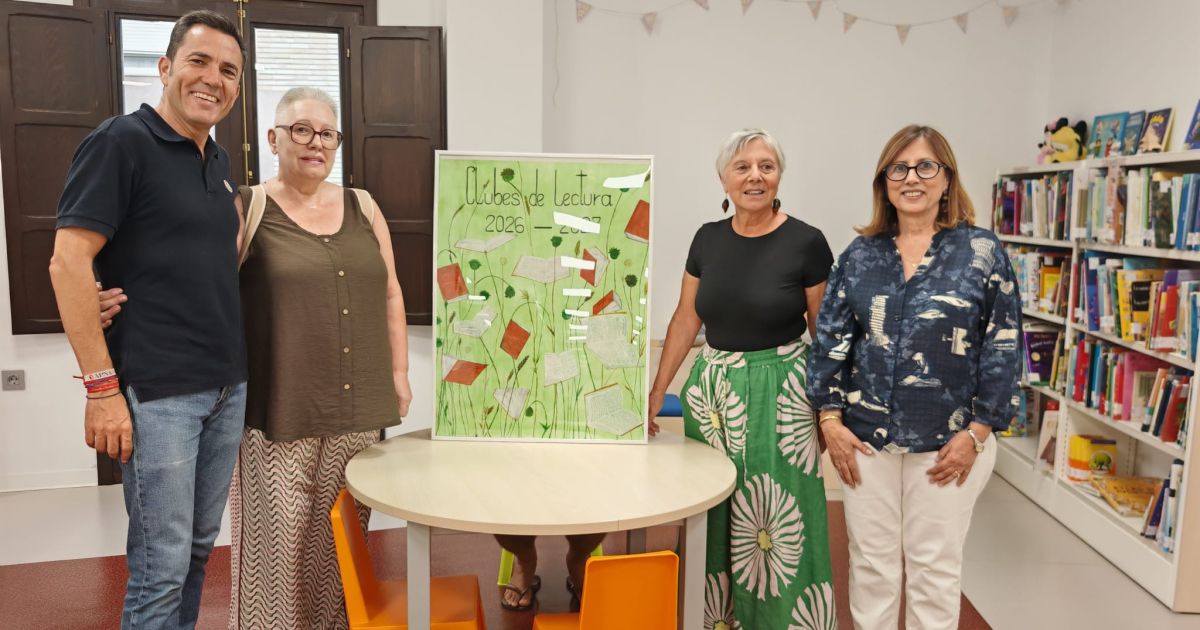
In Canet d'En Berenguer, a municipality neighbouring Sagunto within the Camp de Morvedre district, the local reading clubs turn 20 with four adult groups and a new club for 5- and 6-year-olds focused on women writers.
Twenty years after their first session, the reading clubs of Canet d'En Berenguer — a municipality neighbouring Sagunto within the Camp de Morvedre district — are kicking off their widest season yet. The launch took place on Monday at the Casa de los Llanos with an unusual way of presenting a cultural programme: organisers used the language of a wine tasting to walk through the course's different reading tracks, block by block. Around fifty local residents turned up.
Behind the wine metaphor is Amparo Llusar, who runs the project and links it to the Greco-Roman tradition of pairing wine with conversation and shared storytelling. She was joined by Begoña Alonso, who leads the Tuesday club and the Valencian-language sessions, and Maribel Pereira, taking on the coordination of the new children's activity this year.
The adult offering grows to four clubs — one entirely in Valencian — and, for the first time in two decades, a group for children joins the programme. The whole season is built around a single thread: women writers. Three terms will structure the calendar: contemporary fiction from Europe, the United States and Australia in the first; the history, culture and literature of Korea — with a focus on its female authors — in the second; and, in the third, a leap to Spain's Generación del 27 (Generation of '27, a celebrated group of early-20th-century writers), broadened to include European women writers of the interwar period.
The standout new addition is called "Viernes de cuento" (Storytelling Friday) and will bring together, each week between 5pm and 6pm at the Casa de los Llanos, a small group of young readers aged 5 and 6, capped initially at ten. Unlike the adult format, the focus here is oral storytelling: classic tales — Grimm, Aesop — as a starting point for building imagination and vocabulary, following a Steiner-inspired teaching method.
This kind of cultural programming, with Valencian-language activities and a theme built around women's literary output, fits into a wider push across Camp de Morvedre to sustain reading spaces and everyday use of the local language, alongside other district-wide events such as the Trobada d'Escoles en Valencià (Valencian Schools Gathering) or the Premis Sambori (Sambori Prizes), which each year involve schools and libraries across several municipalities in the district, Sagunto included.
The Biblioplaya (beachside library) will host the Monday, Tuesday and Valencian-language sessions, while Wednesdays continue, as before, at the Casa de los Llanos in the old town. The new season officially starts between 5 and 12 October.
Canet's experience adds to a district-wide network of reading clubs that, in recent years, has also gained ground in neighbouring towns such as Sagunto, where municipal libraries and other cultural venues have rolled out similar formats to encourage shared reading across different age groups.
The project began two decades ago under professional coordinator Marta Salvador, hired by the town council to launch it. Writer José Manuel Pedrós later ran the sessions voluntarily until the pandemic interrupted in-person activity; since then Llusar, Alonso and Pereira have kept the project going as unpaid volunteers. Mayor Pere Antoni used the presentation to run through the numbers: library loans rose from 2,420 in 2020 to 4,721 in 2025, and this year's figures point to breaking that record again.
Canet's experience also illustrates how promoting reading has become a common tool for sustaining the everyday use of Valencian in small Camp de Morvedre municipalities, where gatherings like this one complement other well-established district events — the Trobada d'Escoles en Valencià, the Premis Sambori, FesCamp — and where local volunteering, such as that of Llusar, Alonso and Pereira, is key to keeping cultural offerings alive outside the district's larger towns.
The Biblioplaya's very name reflects the coastal identity shared by many Camp de Morvedre municipalities, including Sagunto, where the seafront — with its beaches and promenade — is also part of the district's cultural identity beyond the summer months. Initiatives like this show that promoting reading does not have to be confined to traditional library spaces, and can instead adapt to the meeting places each municipality has already built into everyday local life.
How well proposals like this take root also depends, to a large extent, on the council's willingness to provide spaces and coordinate schedules across departments — a balance that appears to have worked so far in Canet, judging by the steady growth in participants over recent years.
According to El Periódico de Aquí.
← Back to today’s edition