Trial of 11 Greenpeace activists over Sagunto port blockade opens in Valencia
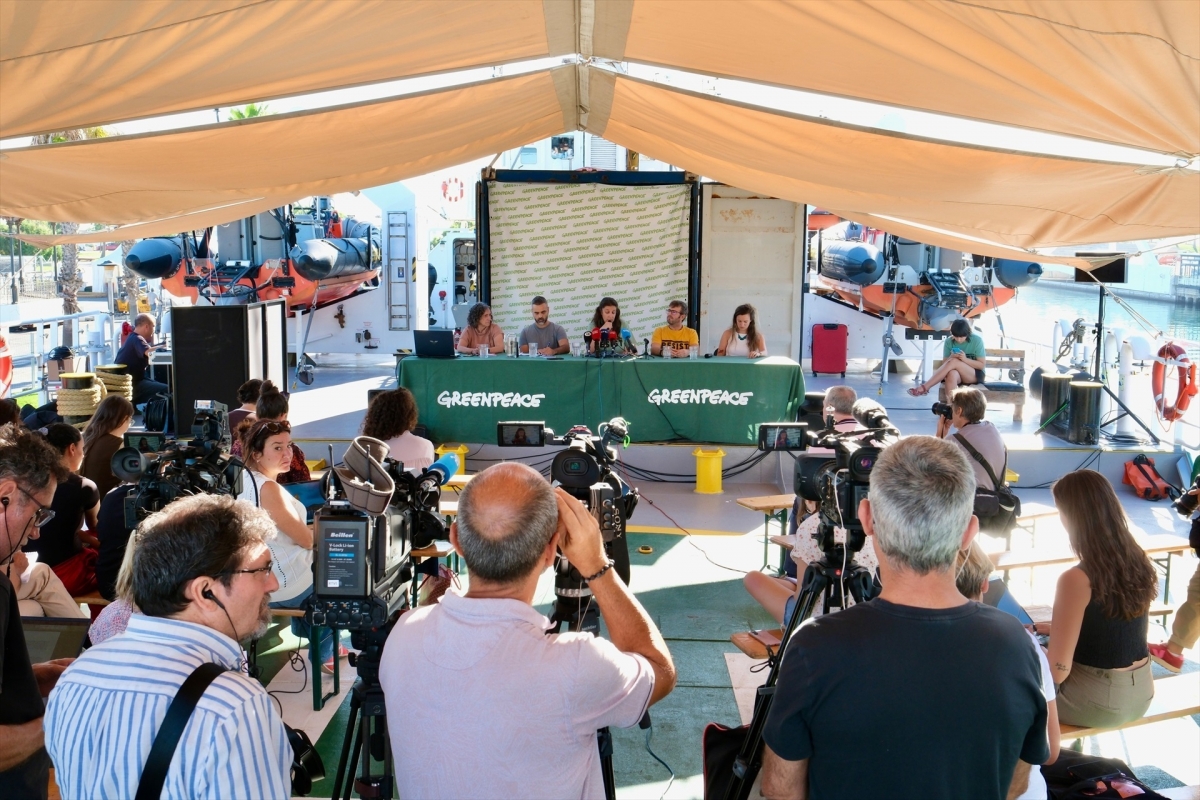
Valencia's Tribunal de Instancia began trying 11 Greenpeace activists on Wednesday over a 2021 blockade of a gas ship at the port of Sagunto; prosecutors are seeking five years in prison for each defendant.
Puerto de Sagunto (the coastal, industrial district of Sagunto) has been, since Wednesday, the backdrop to a court case Greenpeace describes as a test for the right to protest across Europe. Eleven activists are standing trial at Valencia's Tribunal de Instancia over their role in stopping a gas ship from entering the port of Sagunto almost five years ago. The blockade targeted the Saggas regasification plant, a facility that in 2025 covered more than 100% — precisely 101.77% — of the Valencian Community's natural gas demand and handled 14.87% of all liquefied natural gas unloaded across Spain's entire gas network. That scale helps explain why prosecutors are now seeking up to five years in prison for each defendant.
The ship blocked in 2021 was arriving from the United States carrying 138,000 cubic metres of fracked natural gas. The eleven defendants — of eight different nationalities, four of them Spanish — immobilised the port's access for much of that day. Prosecutors have classified that act as aggravated public disorder, seeking a sentence Greenpeace itself calls the harshest ever sought in Europe against environmental activism.
For the organisation, treating an incident with no injuries or property damage as a serious crime is disproportionate, especially since it has already paid over €160,000 in administrative fines for the same episode. The press conference where Greenpeace laid out its defence had a symbolic setting: the deck of the Arctic Sunrise icebreaker. Speakers included Greenpeace Spain's executive director, Eva Saldaña; lawyer Javier Raboso, head of the organisation's Democratic Space and Law area; solicitor Inés Díaz; and two of the defendants themselves, Francisco del Pozo and Ylenia Burisch.
According to the defence, authorities detained only the ship's captain at the time of the protest; the criminal case was later extended to the other ten activists even though, they insist, none of them was accused of causing injury or damage. Raboso used the appearance to call for the repeal of Spain's public security law — popularly known as the "gag law" (Ley Mordaza) — which took effect on 1 July 2015 and penalises conduct such as protesting near certain buildings or photographing police officers.
The trial has drawn heavyweight international observers: Michel Forst, the UN special rapporteur on environmental defenders, and Amnesty International have confirmed they will follow proceedings from the courtroom. For Francisco del Pozo, who faces up to twelve years in prison across three separate cases tied to his activism, and for Ylenia Burisch, who is risking five years in this trial alone, the experience mixes personal strain with conviction: both told reporters they intend to keep protesting despite the cost involved.
The case also puts the spotlight on a location key to the district's economy: Puerto de Sagunto is home to much of Camp de Morvedre's industrial base, from the ArcelorMittal steelworks to the Saggas plant itself, and its port activity has traditionally been one of the city's economic engines. The case also comes at a moment of transformation, as Sagunto tries to position itself as a reference point for renewable energy and electric mobility — a backdrop that adds another layer to the debate over what role natural gas should play in the energy transition.
The trial is expected to run over several sessions, with the activists themselves, Guardia Civil (Civil Guard) officers and Saggas representatives all due to testify before both sides present their closing arguments and the court sets a date to issue its ruling — a step that, in cases of this complexity, often takes several weeks after the hearing ends.
In Sagunto, the case also revives a wider debate over the balance between industrial activity and environmental movements in a district that combines a first-tier manufacturing base with protected natural spaces such as the Marjal dels Moros wetland, and where recent years have seen a string of protests over land use — from farmers' complaints about land set aside for rail infrastructure to neighbourhood mobilisations linked to new industrial developments.
Saggas has spent two decades operating the liquefied natural gas regasification plant at the port, a period in which it has become a key piece of the Valencian Community's energy supply and has also developed community outreach programmes, such as sports sponsorship initiatives in local schools.
According to Valencia Plaza, with additional background from Wikipedia on the gag law and from Saggas on the regasification plant.