Sagunto's 36th Moros y Cristianos festival begins on 25 September
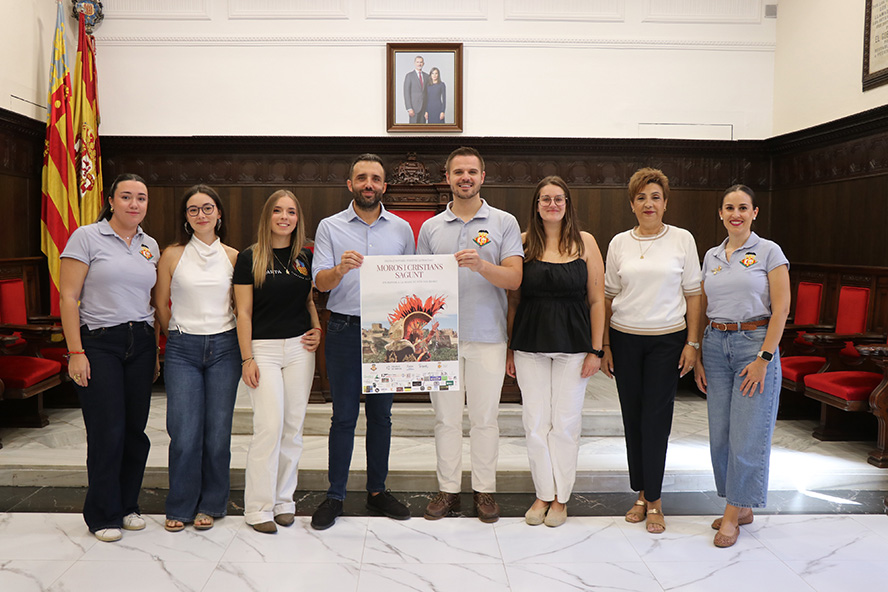
Sagunto is holding its 36th Moros y Cristianos festival in honour of the Virgen del Remedio between 25 September and 4 October, newly named a Fiesta de Interés Turístico Autonómico (Regional Tourist Interest Festival) this year.
Sagunto gains a new label this year: the Generalitat has declared its Moros y Cristianos festival a Fiesta de Interés Turístico Autonómico (Regional Tourist Interest Festival) just as the 36th edition begins, running from Friday 25 September to Sunday 4 October in honour of the Virgen del Remedio (Our Lady of the Remedy). Spread across two weekends, the programme mixes religious ceremonies, parades and community gatherings with dozens of the town's comparsas (costumed festival groups).
Two dates anchor the first weekend. Before 20:00 on Friday 25, the comparsas will already have paraded along Camí Reial street, around 19:45, and shortly after, at 20:30, journalist Marián Romero delivers the Pregón that formally opens the festival from the Town Hall balcony. Plaza Cronista Chabret hosts the traditional cena de olla (communal stew dinner) that same night, followed by the cultural awards from 21:30 and dancing to the band En bucle covers into the small hours. The mood shifts on Saturday 26 with the Alardo, a gunpowder display: festeros gather at 18:30 in Plaza Cronista Chabret, and an hour later the trabucos (ceremonial blunderbusses) open fire along a musical route — Camí Reial, the Antigua Morería and Calle Los Huertos — that loops back to the Terraet area.
Religious tone returns for the second weekend. The Despullament del Moro (a symbolic "unmasking" ceremony) opens that stretch on Friday 2 October: groups meet at the Terraet at 19:00, walk to the Church of El Salvador half an hour later, and, once inside, present a floral offering to the patroness at 20:15; this year Ángel Murillo takes on the role of Embajador Moro (Moorish Ambassador). The Gran Entrada Mora y Cristiana (Grand Moorish and Christian Parade) takes over the next day: after a 19:15 thanksgiving ceremony in the same church, the parade sets off at 19:30 for the UGT trade union headquarters, crossing Calle Valencia, Camí Reial and Avenida Doctor Palos. Sunday 4 brings the close: groups gather at 11:15 in the Antigua Morería, climb to Sagunto Castle, and at 12:30 re-enact the Battle at the Almenara Gate, which leads into the city's anthem.
Anyone driving through the town centre on those dates should note that much of the route — Camí Reial street, Plaza Cronista Chabret, Avenida Doctor Palos and the area around the castle — will be closed to traffic while the parades and Embajadas take place, so it's best to park outside the old town and walk. Timings for each segment can shift slightly at short notice, so it's worth checking the official Town Hall and Moros y Cristianos Association channels before each event.
Moros y Cristianos festivals are one of the defining traditions across much of the Camp de Morvedre district and the wider Valencian Community, typically combining a staged re-enactment of the medieval Reconquista with strong neighbourhood participation: each comparsa brings together families who often carry on the same side and costume style across generations. In Sagunto, the festival shares the local calendar with the March Fallas and with events such as the Falleras Majors exaltation ceremony and the FJFS Playbacks contest, giving a sense of how packed the city's community calendar is between late summer and spring. That mix of traditions, combined with the new regional recognition, strengthens Sagunto's case as a festival-tourism destination within the district.
This year, Simón Bermúdez leads the Moorish side, joined by his sister Candela Bermúdez as standard-bearer; on the Christian side, MªCarmen López represents the Jaume I comparsa as standard-bearer, while at Llancers de Morvedre it is Marta Roldán and Mario Sendra who hold the standard-bearer and captain roles respectively.
At the presentation event, with Mayor Darío Moreno, Councillor Patricia Sánchez and association president Patrick Salvador, all three agreed on how much this date matters to local identity: the mayor framed the festival as a summary of what the town is and where it comes from, while Sánchez described the new regional label as the fruit of years of dedication by the organising association, encouraging standard-bearers and captaincies to make the most of a season they will remember for a long time.
Salvador outlined this year's changes: a newly formed squad called Taifes is joining the Almoràvides comparsa; dance numbers choreographed by Ana Botella — whose company he ranked among Spain's best — will feature in the Gran Entrada thanks to an agreement with the Culture Department, and coordination with Tourism will add a historical re-enactment troupe to the Embajadas day. The association leader also pointed to the festival's economic, social and tourism value for the city.
That tourism value now carries official backing: the festival has honoured the Virgen del Remedio since 1989, almost four decades of continuity underpinning the distinction. Sagunto's Moros y Cristianos Association filed the application on 11 December 2025, approved with the signature of regional Industry, Tourism, Innovation and Commerce Minister Marián Cano. For residents, the recognition does not change the festival's calendar, but it does position the celebration as a tourism draw beyond the town, in a year when Sagunto has already picked up several regional distinctions.
The regional label does not automatically come with a dedicated budget line, but it does certify to the Generalitat that the festival meets the required standards for tradition, distinctiveness and tourism potential, and it typically translates into greater visibility in the Valencian Community's tourism promotion campaigns.
According to aytosagunto.es and elperiodic.com, with additional background from the March 2026 regional declaration.