Sagunto's Roman Theatre takes centre stage at Spain's National Archaeological Museum
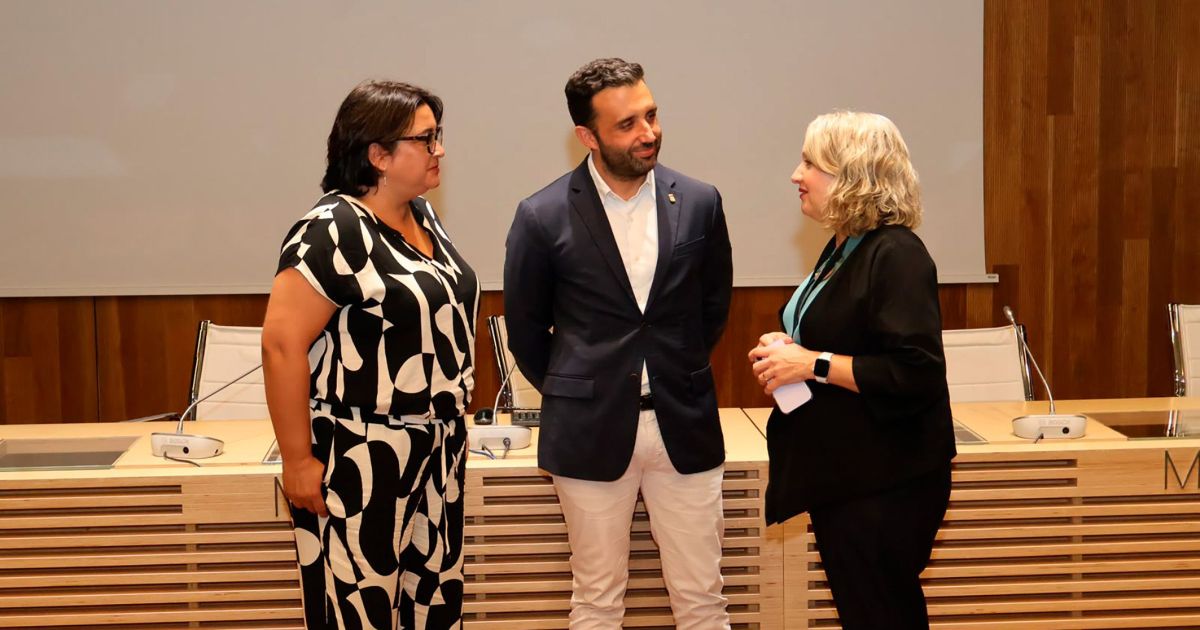
Archaeologist Carmen Aranegui examined the political and urban role of Sagunto's Roman Theatre in a talk held on Tuesday at Madrid's National Archaeological Museum.
When a Roman theatre becomes the subject of debate inside a national museum, the question behind it is not purely archaeological but political: what role did that building play in the life of the city that built it? That was the premise of the lecture archaeologist Carmen Aranegui Gascó gave on Tuesday at Madrid's National Archaeological Museum (MAN), titled 'The Roman theatre as a political and urban icon: Saguntum', focused on Sagunto's own monument.
Aranegui, professor emerita of Archaeology at the University of Valencia, argued that the building was not just a venue for performance but a key piece in the layout of ancient Saguntum: it worked as a hinge between the forum and the part of the city built on the hillside, and its presence, visible from the main access routes, helped shape both the urban landscape and a sense of belonging among its residents.
The talk is part of 'From Greek tragedy to Roman comedy: classical theatre', the exhibition occupying the MAN's Vitrina CERO (Showcase Zero) space until 18 October, which — drawing on the museum's own holdings — frames classical theatre as more than entertainment: also as a tool for spreading ideas and political and social positions throughout history. The event was held in the museum's main lecture hall and introduced by its director, Isabel Izquierdo Peraile.
The timing is no accident: this year marks 130 years since the theatre was declared a Spanish National Monument, on 26 August 1896, making it one of the first buildings in the whole country to receive that level of protection, nearly two decades before the status spread elsewhere in Spain. That early recognition, however, has not spared the monument later controversy. Between 1990 and 1994, architects Giorgio Grassi and Manuel Portaceli carried out a restoration that significantly altered the seating area and stage; the project ended up in court, and the High Court of Justice of the Valencian Community (TSJCV) ruled it illegal for breaching Spain's 1985 Historical Heritage Law, a ruling Spain's Supreme Court upheld on several later occasions. That legal history makes the building itself a textbook example of the clash between contemporary intervention and heritage conservation that Aranegui placed at the centre of her talk.
A delegation from Sagunto's town hall, invited directly by the museum, attended the lecture. It was led by the mayor, Darío Moreno, accompanied by the councillor for Cultural Heritage and Tourism, Natalia Antonino, and by municipal heritage staff. For the town hall, attending an event of this kind is more than a protocol gesture: it adds to the outreach strategy it has been building around the archaeological site and aims to strengthen ties with one of Spain's leading archaeological institutions.
The town hall often leans on this kind of outside recognition when it argues for new funding for the site with other administrations, whether European heritage grants or agreements with the Generalitat: the greater the monument's national profile, the stronger the council's case for future investment in its upkeep and tourism promotion.
For anyone who only knows the Roman Theatre through its summer performances, Aranegui's lecture adds a different layer: that of a building which has been, at once, a stage for classical theatre, a symbol of civic identity in Roman times, and the subject of legal disputes in democratic Spain. That combination — a living monument, a subject of academic debate and the protagonist of court rulings — is unusual among the Roman heritage preserved in the Valencian Community, and helps explain why a museum as prominent as the MAN gave it its own session within its classical-theatre programme.
That national profile also fits neatly with the monument's own calendar in Sagunto, which each year hosts events such as the Ludi Saguntini festival. The Cultural Heritage and Tourism department often leans on appearances like this one to back its argument that the Roman Theatre deserves visitors year-round, not only when it coincides with live performance seasons. According to El Periódico de Aquí, with additional background from Wikipedia.