Sagunto removes diseased trees near the Castle and San Cristòfol chapel
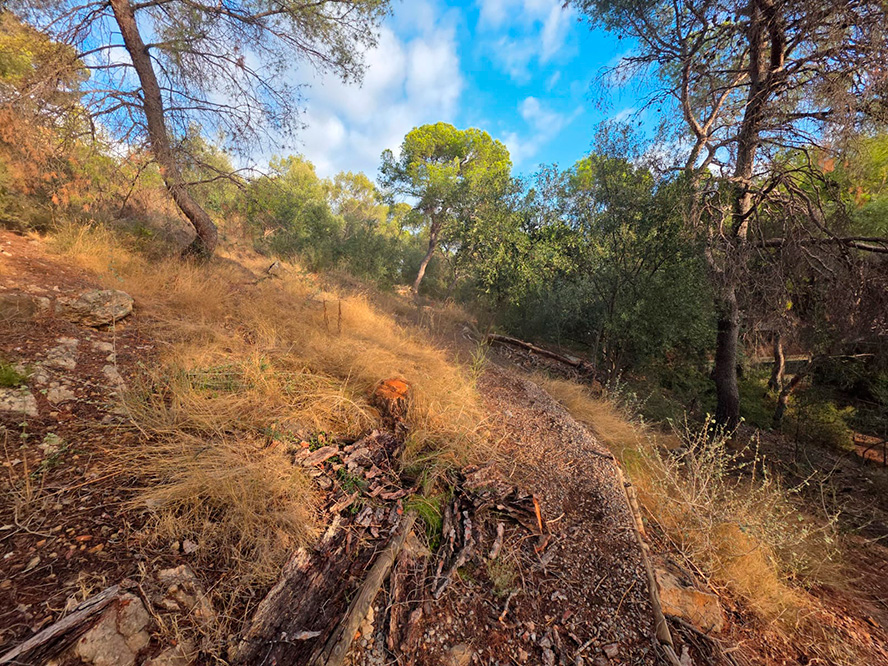
Sagunto City Council has started removing pine trees killed or damaged by bark beetles around the San Cristòfol chapel and, next, on the Castle's slopes, in a 46,464-euro project.
Sagunto Castle is no ordinary hill: it is officially listed as a Bien de Interés Cultural (Spain's highest heritage-protection category) with monument status, and it is precisely on its slopes that most of the forestry work the City Council has just launched is focused, aimed at stopping a pest that has long been weakening the pine forest around it. Crews are already working, as a first step, next to the San Cristòfol chapel; once that phase is finished, the machinery will move to the foot of the hill where the fortress stands.
The company carrying out the work, Franber Natura SL, has a budget of 46,464 euros including tax and four weeks to complete it, though it can only operate Monday to Thursday, a restriction imposed by the summer fire-prevention campaign. That is also why the start of the work kept being pushed back: crews had to wait for weather conditions that would allow heavy machinery to be used without raising the risk of sparking a fire.
In total, 23.88 hectares will be treated, split into three sections: part of the slopes is council-owned, another belongs to Spain's Ministry of Economy, and the third covers the hillside around the chapel. The wood removed will get a second life, since it will be used to build albarradas — traditional stone-and-earth walls that have held back loose soil on these slopes for generations.
Behind the plan lies a precise diagnosis: the area's pines show signs of decline from a combination of factors — very old trees, drought that repeats year after year, sea-air exposure and, above all, bark-beetle attacks, with Tomicus destruens singled out by council technicians as the main culprit. This small boring beetle is common across the Mediterranean region, where it typically preys on species such as stone pine or maritime pine, which explains why Sagunto's forest mass has long been showing warning signs.
With that picture in mind, the City Council has set several priorities for the work: stopping more dead or badly weakened trunks from falling, cutting off the insect's spread before it colonises more ground, making the most heavily used trails and picnic areas safer, clearing away the dry branches that would fuel a potential fire, and protecting the scenic value of a spot that combines nature, history and everyday recreational use. To achieve this, crews will remove dead or diseased trees, clear away those that have already fallen under their own weight, separate trunk, branches and crown for different disposal routes, and install nest boxes designed to attract insect-eating birds that can naturally help keep the beetle in check going forward. According to aytosagunto.es and elperiodic.com, with additional background from Wikipedia.