Mosquito complaints in Sagunto fall 82% compared to last year
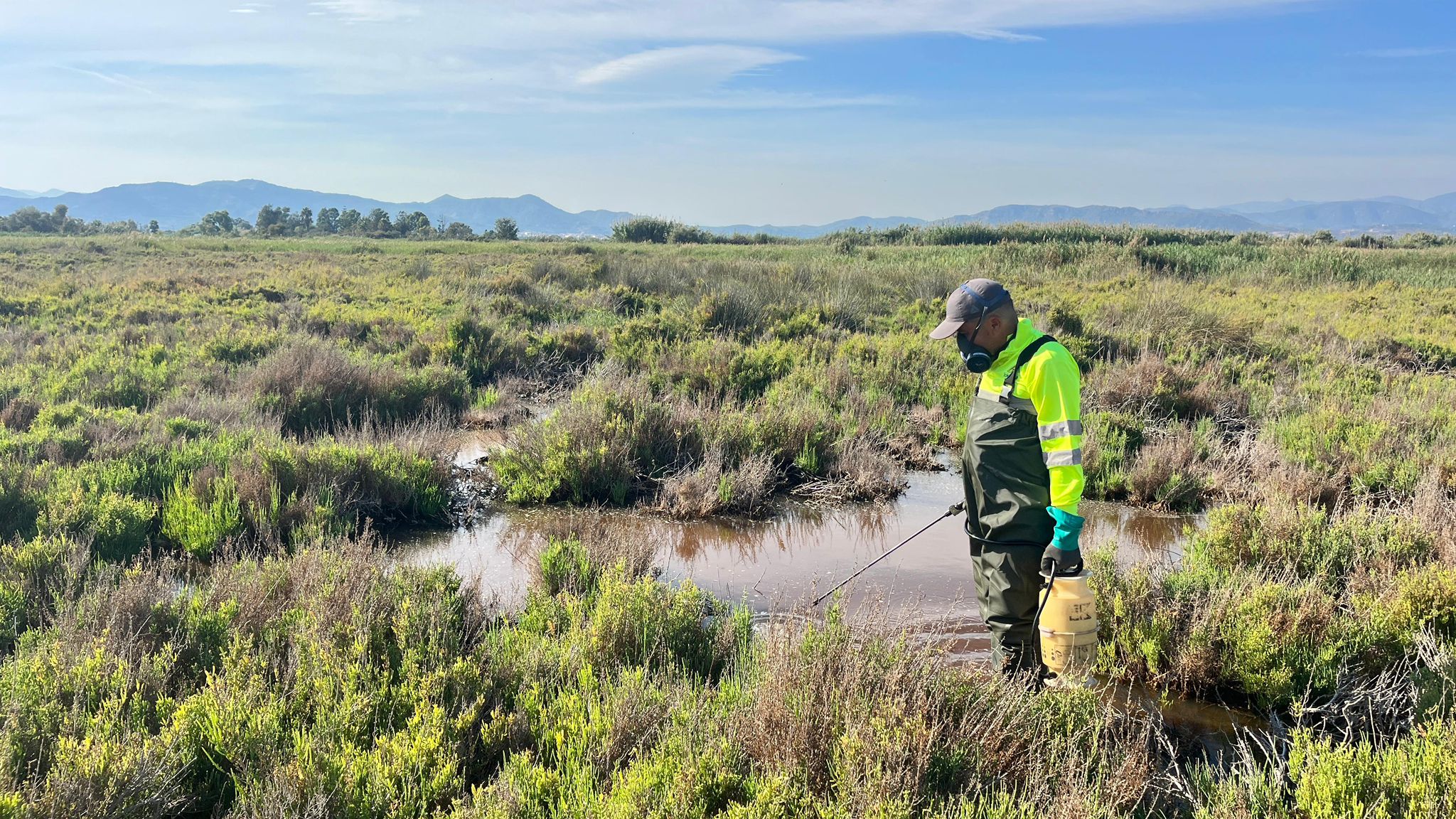
Sagunto City Council logged 68 mosquito complaints between January and 7 September 2026, down from 385 in the same period of 2025, thanks to a stronger public health surveillance plan.
If it has felt like fewer mosquito bites this summer, the council's own numbers back that up: between 1 January and 7 September 2026, Sagunto City Council received only 68 resident complaints about mosquitoes, well below the 385 logged in the same period of 2025 and the 228 of 2024. The numbers speak for themselves: 82% fewer than in 2025 and 56% fewer than in 2024, according to the council's own count. That contrast matters because mosquito complaints usually spike right when the heat is at its worst, raising the risk of bites in patios, terraces and areas near the marjal (the town's coastal wetland).
According to the municipal Public Health department, the improvement follows a stronger version of the mosquito surveillance and control programme, which runs every season from March to October. Under it, council crews regularly inspect drains, empty plots and any corner of town where water can pool, trying to break the cycle before larvae become adult mosquitoes capable of biting and breeding. At the height of summer, when heat and humidity drive up breeding in areas with more vegetation, these checks become even more intense.
The work does not stop at the town centre. In the marjal wetland and in flood-prone land across the municipality -areas where constant humidity especially favours mosquito breeding- technicians visit the main breeding sites up to three times a week. There they apply biological larvicides that target the larvae selectively, without harming the rest of the wildlife in these habitats, several of which have environmental protection status.
Since 2024, this fieldwork has been backed by Sagunto's participation in a regional programme against the tiger mosquito, run by the Conselleria de Agricultura (the Valencian regional agriculture department), through the Sterile Insect Technique. The method involves breeding infertile males in a laboratory and releasing them into the wild, where they compete with wild males to mate with females; when a female mates with one of these sterile males, her eggs never hatch, so the mosquito population gradually falls without the need for more insecticide. In the phase currently under way, the programme plans to release more than 18,000 sterile insects a week until early December at sites including Triángulo Umbral, Plaza Cronista Chabret and Plaza de l'Aljub, three spots chosen because they have historically concentrated much of the problem.
Behind all this effort is a species that is far more than a summer nuisance: the tiger mosquito (Aedes albopictus). Several scientific studies identify it as a carrier of diseases such as dengue -commonly found across large parts of Central America, South America and the Pacific- and yellow fever, which explains why health surveillance stays active even in a year with clearly better figures.
Public Health councillor Javier Timón says the control work is adjusted every year to weather conditions and that the municipal team has no plans to ease off if the coming weeks bring more rain or heat, despite the good results so far. He also points out that most breeding sites are not on public land but inside private gardens, terraces and plots, and asks residents to regularly check any container that can hold water -plant pots, buckets, paddling pools- and empty, cover or renew it.
The council is also asking for active collaboration: anyone who spots an unusual number of mosquitoes can report it by writing to [email protected] or through the municipal app. These reports, the Public Health department notes, help target treatments at the areas that actually need them instead of acting indiscriminately across the whole municipality, and will be key to keeping the downward trend going for the rest of the campaign, which stays open until October.
According to aytosagunto.es and elperiodic.com, with additional data from Wikipedia on the tiger mosquito and the Sterile Insect Technique.