Sagunto launches STOP BULLYING, a municipal anti-bullying programme
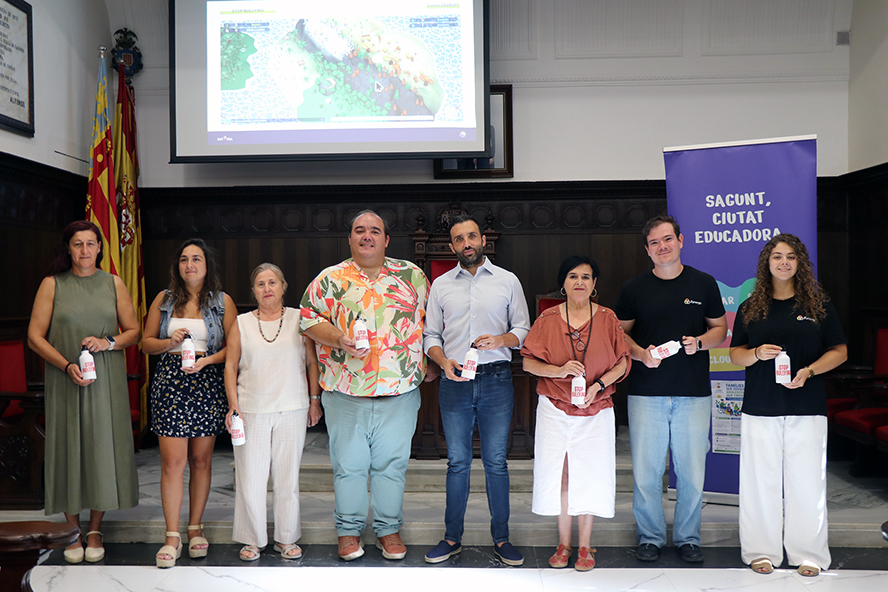
Sagunto City Council will launch STOP BULLYING from the 2026-2027 school year, with 16 workshops for parents and an educational video game for classrooms in Sagunto.
Back-to-school season in Sagunto brings a new council programme against bullying: STOP BULLYING, presented for the 2026-2027 school year under the slogan "Because educating also means learning to live together". The Department of Education has designed the initiative to run year after year in the city's schools, not just for one term.
At the launch event, held on 8 September in the plenary hall of Sagunto City Council, the mayor, Darío Moreno, and the councillor in charge of the area, Raúl Palmero, spoke alongside the department's technical coordinator, Rosa Dasí, and Ernesto Buñuel, from Zynergic, the company that built the digital tools.
The council has been clear about where its role ends: investigating and resolving specific bullying cases remains the job of schools themselves and the regional education authority. What the council adds is extra support — coordination, training and prevention materials — built on the idea that no child should have to face bullying alone.
For families, the change will show up on the school calendar itself: schools will start using the STOP BULLYING materials from September, and the first parents' school sessions will take place in October and November, with a second round in spring. Anyone already living with a bullying case does not need to wait for the programme to be fully up and running — the school's own protocol and the specialised national helpline remain available regardless of the municipal timetable.
The first strand of the initiative gives teachers a digital tool for tackling bullying in tutoring sessions, built around an educational video game aimed at students. In it, each student builds and expands their own virtual village as they work through small challenges about getting along with others, designed to help them spot bullying behaviour, understand how it feels for those on the receiving end, and know what to do if they witness it.
The second strand focuses on families. The department has set up a parents' school — 16 training sessions between October and November, and again between April and May — covering topics as varied as communication at home, setting boundaries, handling emotions, school performance, absenteeism, healthier screen habits and, of course, bullying prevention itself.
A third strand rounds out the project: awareness materials and campaigns meant to make the council's commitment visible to students and families, plus ongoing coordination with schools so the support fits what each school actually needs, rather than applying one fixed formula everywhere.
Moreno linked the programme to a wider goal of building active citizenship from an early age, involving students, teachers and families in spotting problems early, and said the project will keep adjusting as the school year goes on. Palmero stressed that continuity is the key point: he wants STOP BULLYING to run every year until it becomes a defining feature of education in Sagunto.
The programme lands in a school year where schools in Sagunto and across the wider Camp de Morvedre district, as in previous years, are seeing children and teenagers get access to phones and social media earlier and earlier — a factor education authorities regularly link to the rise in cyberbullying. The learning unit and the parents' school do not replace the work of schools or the regional education department, but they do add a resource coordinated by the council itself.
Nationally, school bullying affects roughly one in five children in Spain, a figure somewhat below the estimated global average of close to one in three, according to various international studies — one reason why early prevention remains a shared priority among education authorities.
Before STOP BULLYING has all its resources up and running, families needing immediate help can already call Spain's national anti-bullying helpline on 900 018 018: a free service, staffed 24 hours a day, 365 days a year, by psychologists, educational psychologists, lawyers, sociologists and social workers who specialise in bullying and cyberbullying. According to aytosagunto.es and El Periódico de Aquí, with additional information from Spain's Ministry of Education, Vocational Training and Sports, and from Wikipedia.