CCOO warns of a tense school year in Camp de Morvedre, does not rule out a strike
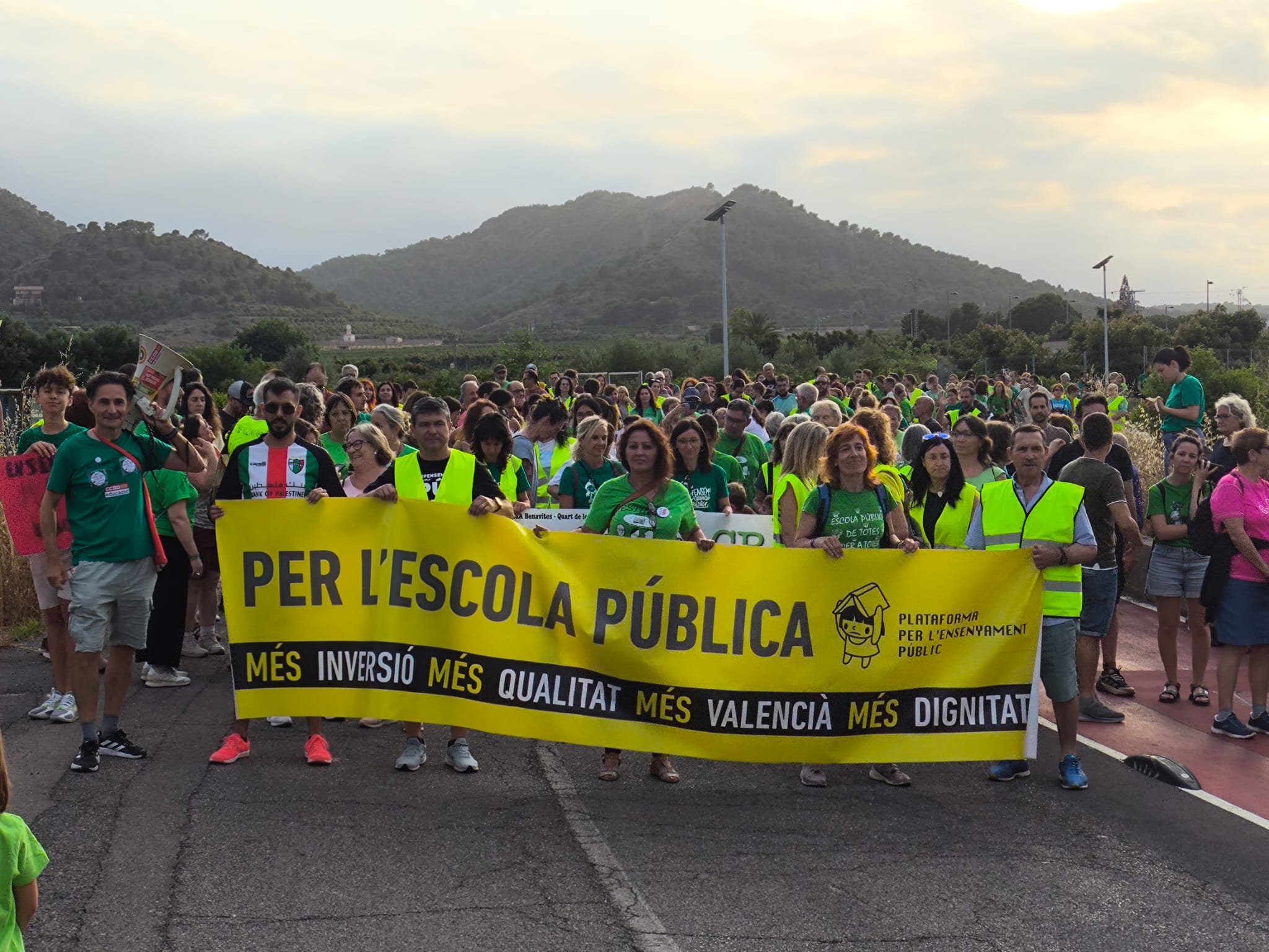
The CCOO teachers' union in Camp de Morvedre warns that secondary schools are overcrowded and does not rule out resuming its indefinite strike if the regional education department fails to give ground before protests begin on 10 September.
For families in Camp de Morvedre sending their children back to school this week, the local branch of the CCOO teachers' union has an uncomfortable message: the new school year may not stay confined to the classroom. The union has already called the first protests — gatherings on Thursday 10 September outside schools, followed two days later by a demonstration in Valencia — and is not ruling out reviving the indefinite strike that began on 11 May if the regional education department, the Conselleria d'Educació, keeps refusing to move at the negotiating table.
The 12 September demonstration will set off at 6pm from Plaza de Sant Agustí in Valencia city, and the union hopes it will draw students and families as well as teachers. Behind this call to the streets is CCOO's assessment of the negotiation meetings held with the regional government in July: in the union's view, progress was limited and not enough to defuse months of built-up tension.
So what exactly is the union asking for? First and foremost, more space. CCOO has spent months warning that secondary schools in Sagunto and elsewhere in the district are stretched to their limits, a situation it links to steady growth in the school-age population. That growth, in turn, has a cause that goes beyond the classroom: the district is going through a period of industrial expansion — most visibly the future PowerCo battery gigafactory — that has drawn many working families to settle in the area in recent years. The result, according to the union, is mounting pressure on schools that already lacked adequate resources before this population growth began.
The union's list of unfinished business comes with specific school names attached. In Sagunto itself, it points to two: the Eduardo Merello vocational college and the Santa Anna primary school. Outside the town centre, attention is spread across four villages in the district — Albalat dels Tarongers, Benifairó de les Valls, Faura and Quart de les Valls — each with ongoing works that, in the union's view, either never really got going or have been frozen for months. The example CCOO returns to most often is Benavites, where, it says, the school renovation does not even have a timeline yet, while the building remains in what it calls poor condition.
The other major front is, quite literally, about the heat. Year after year, the union repeats the same demand — installing cooling systems in classrooms — and year after year it judges the Conselleria's response to fall short. Its outlook for this year is no more optimistic: students and teachers, it warns, will again spend stretches of the school calendar in classrooms where the thermometer easily tops 27°C, with the drop in concentration and performance that kind of heat brings in practice. On top of that sits a deeper doubt — whether the regional budget set aside for installing air conditioning is actually enough to cover every school before next summer arrives.
Beyond these two urgent issues, CCOO's list of demands is broad: lower class sizes, larger teaching and support staff, and changes to the regional government's language policy. The union also questions the direction it believes vocational training, official language schools and early-years education for children aged 0 to 3 are taking, areas where it accuses the regional government — in what it frames as a clearly political assessment — of favouring private providers over the public network.
Recent regulatory changes from the Valencian regional government are another target of the union's criticism. CCOO argues that concepts introduced recently, such as "ideological neutrality" or opposition to "indoctrination", could lead to excessive monitoring of teachers' work and push them, in practice, towards self-censorship. Added to that is the union's outright rejection of Ley 1/2024, the regional language-in-education law, which it considers harmful to families' right to decide what language their children are taught in.
CCOO's message to families in Sagunto and the rest of Camp de Morvedre is easy to sum up: September begins with a protest calendar already locked in, and with the indefinite strike hanging over the talks as a threat if the regional government does not shift position. The union has called on teachers, students and families to join the gatherings on the 10th and the demonstration on the 12th in Valencia. According to El Periódico de Aquí.
← Back to today’s edition