Sagunto to hold its first Municipal Agriculture Day on Wednesday
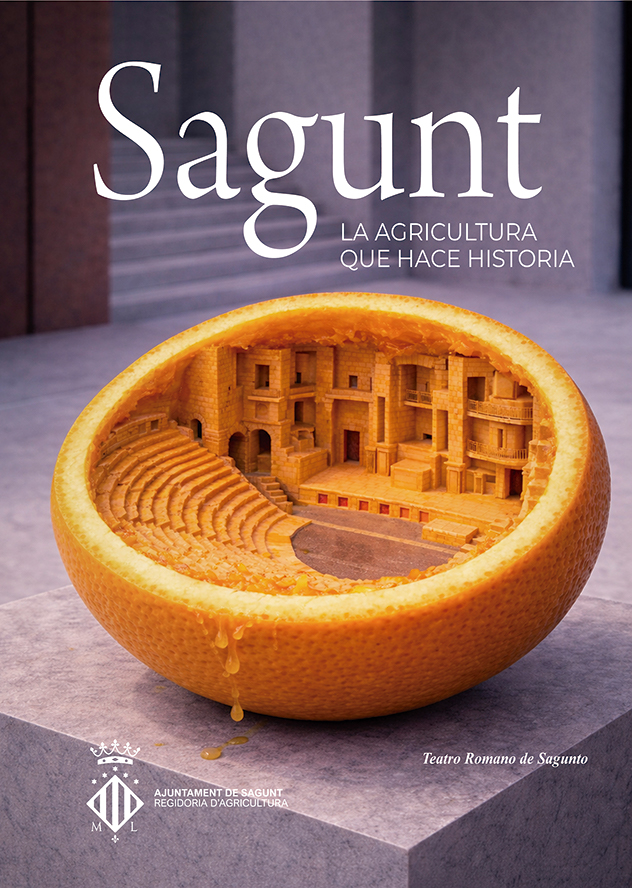
Sagunto City Council marks the new Municipal Agriculture Day on Wednesday 9 September at 19:00 at the Joaquín Rodrigo Auditorium, with a tribute to Rural Guard officer Juan Miguel Soria, who died recently.
Sagunto City Council will hold its first Municipal Agriculture Day this Wednesday, 9 September, starting at 19:00 (7pm) at the Joaquín Rodrigo Auditorium. The date is not random: on 6 August, at the ordinary plenary session, the City Council approved an institutional declaration that sets 9 September every year as a day to recognise the local farming sector, and Wednesday's event will be its first edition.
The programme combines public information with remembrance and personal recognition. Before turning to the sector itself, the event will pay tribute to Juan Miguel Soria, an officer of the Guardia Rural (Rural Guard, the municipal body that watches over farmland, rural paths and agricultural resources) who died recently, and will recognise several officers who retired this year.
The City Council itself describes the event as an outreach and participatory event, meant for all residents and not only for professional farmers: the idea is that anyone who comes to the Joaquín Rodrigo Auditorium on Wednesday will understand why food security, territorial balance and environmental sustainability depend, to a large extent, on keeping Sagunto's farmland active.
Beyond the tribute, the day aims to put figures and faces to a sector the council considers strategic for the city: it contributes to economic development, sustains rural jobs and plays an environmental role — preventing land abandonment, keeping population in rural areas and maintaining the farmland landscape around the town centre and the port. The event also serves as a platform for a concrete demand: that public administrations promote policies to modernise farms and make them more resilient and competitive, since many are still family-run with limited technical resources.
To mark the occasion, the Agriculture Department is presenting the campaign 'Sagunt, la agricultura que hace historia' ('Sagunto, the agriculture that makes history'), which links local produce — citrus fruit, vegetables — with heritage landmarks such as the Roman Theatre or the industrial heritage of Puerto de Sagunto (Sagunto's coastal district). The campaign aims to show that farming is as much a part of local identity as the city's monuments, not just its landscape or economy.
That idea of shared history has a real basis: in the early 20th century, a phylloxera plague destroyed much of the area's vineyards, and the later shift from dry farming to irrigation allowed those vineyards to be replaced with orange and other citrus trees — the crop still associated with Sagunto's farming image today. The municipal campaign draws on that exact episode of transformation to explain why the council says the farming sector is part of the city's memory as well as its landscape.
Agriculture councillor Ana María Quesada summed up the event's purpose in two goals: to highlight the municipality's historic and present role as a farming area, and to encourage anyone wanting to work professionally in agriculture to do so in Sagunto, where she says there is unused farmland, water, logistics and fertile soil available for new projects. She believes attracting new generations to farming is key to preventing land abandonment and keeping alive an activity that, according to the municipal campaign, has been part of Sagunto's identity for more than a century.
The event comes just weeks after the same plenary session approved the institutional declaration that created this new date, making Wednesday's ceremony the real launch of a commitment adopted unanimously in August. For residents connected to the sector — from small producers to retired Rural Guard officers — the ceremony at the Joaquín Rodrigo Auditorium is the first chance to see that institutional commitment turned into a public event with a fixed date on the municipal calendar.
According to Ajuntament de Sagunt — Actualidad, with additional background from Wikipedia on Sagunto's agricultural history.