Sagunto city council votes to expand social protection on water bills
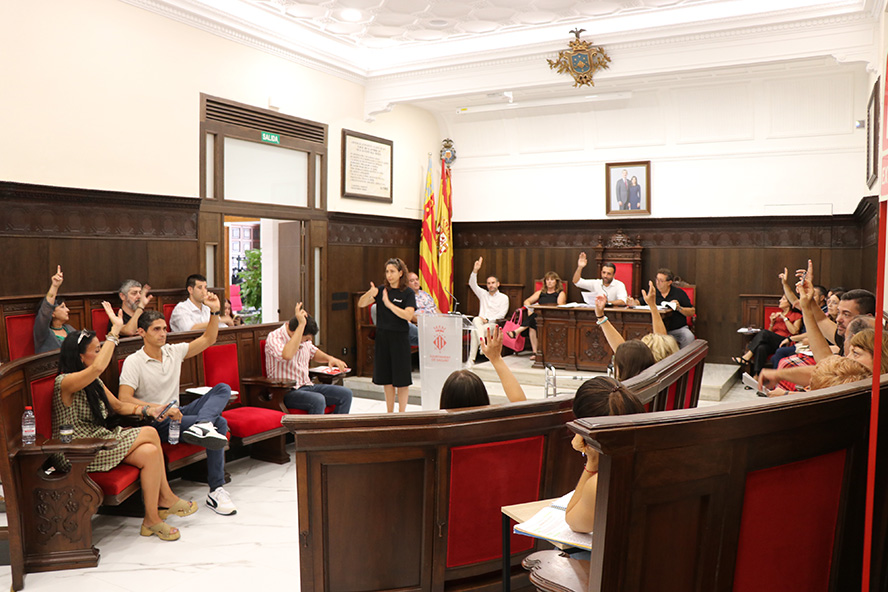
Sagunto's city council unanimously approved reinforcing and expanding social protection on water and sewage tariffs, with a possible discount of up to 50% on bills for vulnerable groups.
Thousands of Sagunto households already struggling to make ends meet could see their water bill cut by up to half, after the city council approved this month, with every group's support, an expansion of the social-protection mechanisms that currently govern water and sewage tariffs. The decision requires the council and Aigües de Sagunt, the company that runs the local water service, to work together to gradually add new categories of beneficiaries to a discount scheme that today reaches fewer people than it potentially could. Aigües de Sagunt is the company responsible for supplying and treating water, running the sewage system, reading household meters, and issuing and collecting bills across the municipality, so any discount that is eventually approved will have to run through its billing systems.
The range of people who could qualify for the new help is broad: households with several children or led by a single parent, young people under 35 trying to move out on their own, people with disabilities or dependency needs, women going through especially vulnerable situations — including survivors of gender violence — and, more broadly, anyone able to document that their financial situation is particularly difficult. For all of these groups, the agreement proposes studying a discount of up to 50% on the water bill, though technical and financial reports still need to be drawn up to set the exact conditions; the text already sets two limits: the discount will only apply to a household's main residence, and it will require reasonable water use, ruling out second homes or excessive consumption.
Behind the timing of this move lies an earlier reform: last August, the same council provisionally approved changes to the ordinance governing water and sewage, including a new charge designed to fund improvement works on water-cycle infrastructure. That charge, while needed to modernise the network, adds an extra cost to every household bill. With September's agreement, the council wants to stop that extra cost falling harder on those with the least money, and it explicitly commits to leaving untouched the support already received by pensioners and other vulnerable people and families who currently have discounts or social tariffs.
The municipal rules themselves acknowledge that protection schemes already existed for certain groups before this expansion, which, according to its backers, shows it is possible to keep the water service's finances sound while still protecting those who need it most. Rather than designing an entirely separate mechanism, the council chose to widen the list of people and families eligible for the existing discounts — an approach that, in theory, should shorten the time needed to roll it out once the technical studies are ready.
Behind the initiative is PP councillor Ximo Catalán (Partido Popular, conservative party), the author of the original proposal, which ultimately passed with every group's backing after an amendment from EU-Unides Podem (left-wing coalition) was added. That amendment tacked on a fourth commitment: draw up the future expansion of discounts together with the Social Services department and then bring it to the Social Rights Committee for debate, with a prior report from that department. The fact that the governing team and the opposition voted the same way, without a single dissenting vote, marks a notable contrast with other routine items on the council agenda, where consensus is usually harder to reach.
None of this will change what any Sagunto household pays right away: what has been approved is a commitment to study and develop the expansion, not a specific social tariff already in force. There is also no deadline yet for Social Services to submit its report or for the Social Rights Committee to debate the proposal, although the agreement itself makes clear there is some urgency: August's investment charge is already provisionally in effect, so the later the new social protection arrives, the longer lower-income families will keep paying the surcharge without the extra support the council itself considers necessary. The next step now falls to municipal technical staff and, after that, to the Social Rights Committee, which will have to settle exactly which groups end up in the expanded scheme and under what specific conditions. According to Sagunto City Council, with additional background from Aigües de Sagunt.