Sagunto invests over 500,000 euros to improve eight public schools
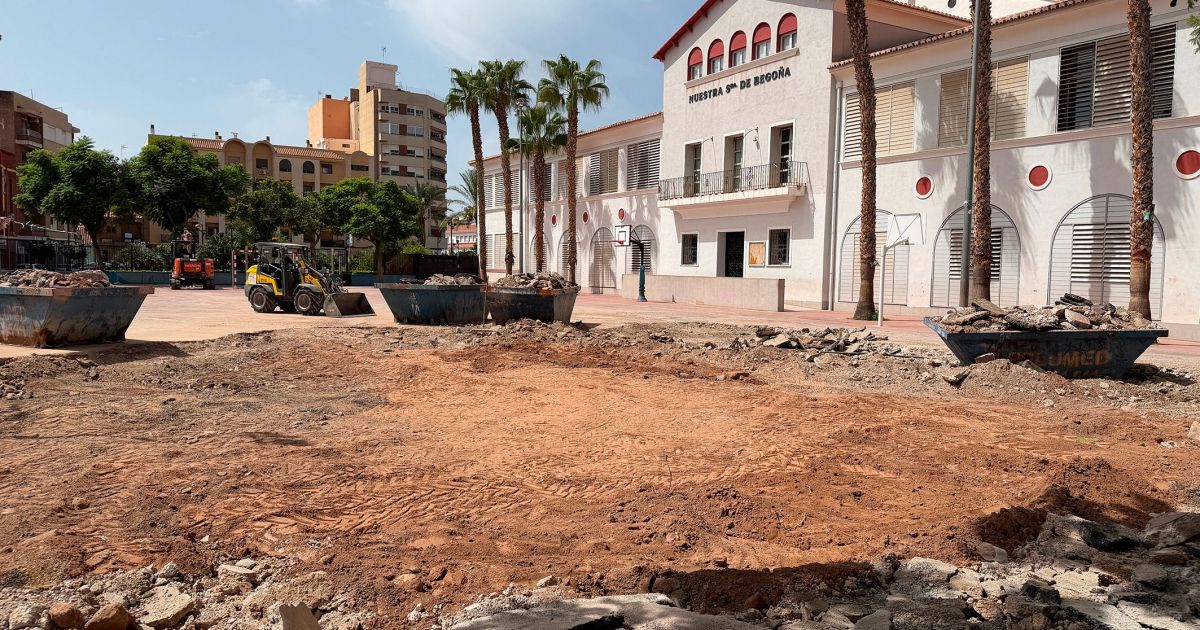
Sagunto City Council is investing more than 500,000 euros to renovate playgrounds, accessibility, kitchens and classrooms at eight public schools, with work under way this summer at four centres so as not to disrupt the school year.
Before the new school year starts, eight public schools in Sagunto will unveil renovated spaces: greener, safer playgrounds, updated kitchens and dining halls, and accessibility improvements that will benefit both pupils and families. This is the result of a package of works launched by the municipal Education department, with a combined spend of more than 500,000 euros.
Of the eight schools, four already have builders on site — with a combined cost of close to 120,000 euros — while the rest will start in the coming weeks. The plan was set by the Education department itself, which has prioritised work linked to two recurring problems at the town's schools: extreme summer heat and flooding after heavy rain.
That is the thinking behind the work at the playground of CEIP Nuestra Señora de Begoña (a state primary school), budgeted at almost 34,000 euros: hard asphalt will be replaced with greenery and permeable surfaces to lower the heat felt on the ground, accessible entry points will be added, and the space will be made ready to host Educational Innovation and Inclusion Projects (PIIE), a regional inclusive-schooling scheme. With a related but different aim, CEIP Montíber is remodelling its nursery playground — for around 8,200 euros — so that rainwater drains properly and no longer floods the play area, as has happened before.
The other two schools with work under way face bigger renovations. At CEIP Cronista Chabret, on a budget close to 36,500 euros, crews are replacing the drinking fountain and fencing, levelling the ground with new soil, moving the perimeter fence and updating the computer classroom. At CEIP Maestro Tarrazona, meanwhile, the budget — more than 40,000 euros — is going towards repainting classrooms, the dining hall and the kitchen.
The rest of the package will arrive a little later. The council plans to improve access to the playgrounds at CEIP María Yocasta and CEIP Cervantes, build a ramp to level out the porch and the playground at CEIP Victoria y Joaquín Rodrigo, and update the kitchen and dining hall at CEIP Ausiàs March. At the same time, minor repairs and routine maintenance continue across the town's public school network.
The person overseeing these works, Education Councillor Raúl Palmero, traces each project back to requests from school leadership teams and families, who he argues are best placed to spot what each school needs. He also admits the council goes further than the law strictly requires when it comes to accessibility, something he puts down to a wish that no child should study in an unsafe or poorly adapted space.
The construction schedule is no accident: July and August were chosen to limit the impact on lessons, although this summer's temperatures — among the highest recorded in the district — have forced crews to change shifts and working pace to protect workers' health.
These eight projects add to a track record of more than two million euros spent over three years and more than 90 works carried out across Sagunto's public schools: recent examples include sealing the roof and redoing the playground at CEIP María Yocasta, replacing windows at CEIP Cronista Chabret to save energy, and resurfacing CEE Albanta, a special-education school, to improve accessibility.
For families at the eight schools involved, the practical result should be noticeable soon: shadier playgrounds with fewer puddles after rain, renovated dining halls and kitchens, and access designed for every pupil — much of it ready before the school year is well under way.
This renewed emphasis on school infrastructure comes as Sagunto continues a broader shift away from its traditional steel industry toward a green-energy and electric-vehicle hub, driven by projects such as the PowerCo battery gigafactory and its associated Battery Campus Sagunt vocational-training centre. That transformation has been drawing new workers and families to the Camp de Morvedre district in recent years, a trend already visible in local housing pressure — part of the wider backdrop against which town hall departments, including Education, are planning longer-term investment in public infrastructure.
According to El Periódico de Aquí — Sagunto / Camp de Morvedre.
← Back to today’s edition