Guardia Civil investigates death of 64-year-old woman at Puçol beach
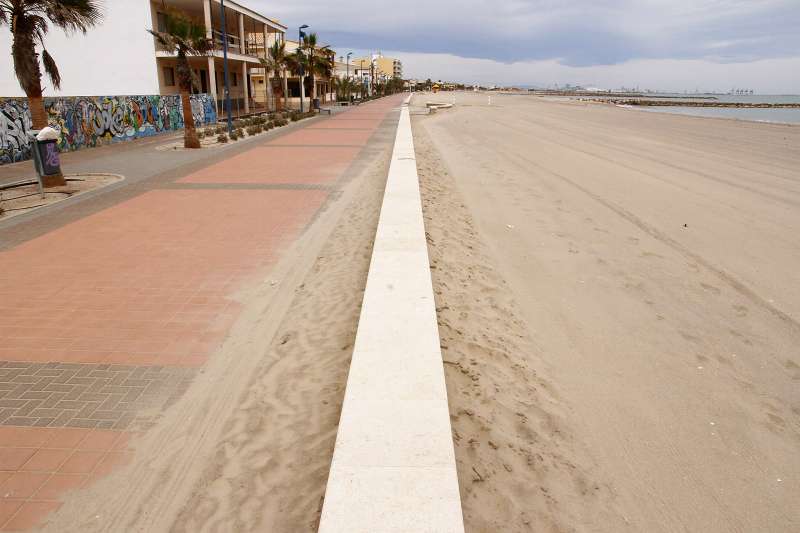
Spain's Guardia Civil is investigating the death of a 64-year-old woman whose body was found floating this Monday at Puçol beach, a coastal town near Camp de Morvedre, with no apparent signs of violence.
For Camp de Morvedre residents who have made the Puçol coastline their regular summer swimming spot, this Monday's news puts the same stretch of sand back in the headlines: a 64-year-old woman was found dead there, barely two weeks after that same spot claimed the life of a 39-year-old swimmer who drowned.
The discovery happened very early in the morning, when the woman was found floating near the shore. She was fully dressed and had a few belongings with her, including a handbag, a detail officers are treating as their first lead in trying to work out who she was, since her identity is still unknown while the investigation continues. In cases like this, standard protocol begins with a call to Spain's 112 emergency line from whoever spots the body (often an early-morning swimmer, a lifeguard, or a coastal patrol) followed by cordoning off the area until the judicial team responsible for formally recovering the body arrives on site.
Guardia Civil (Spain's national police force covering rural and coastal areas) told the EFE news agency that a case file has been opened to establish what happened. From early on, a Policía Judicial (criminal investigation) team has been working the case on two fronts at once: identifying the woman and piecing together the sequence of events before her body ended up in the water. Neither her name nor where she was from has been released so far. When a body turns up without documents that allow immediate identification, standard procedure involves cross-checking fingerprints against police databases and comparing them with missing-person reports filed both in the district and in neighbouring provinces; if that route fails, investigators typically turn to DNA testing, a process that inevitably extends the timeline.
Investigators are not closing off any line of inquiry as the case moves forward. People close to the investigation say a self-inflicted death has not been ruled out, though none of this has been confirmed officially; officers would rather wait for further evidence before setting aside other scenarios, including an accident. Spanish law requires that any death not clearly attributable to natural causes be treated as violent or of unknown cause, which automatically triggers judicial involvement: an on-call forensic doctor attends the scene before the body is formally recovered, after which it is usually placed under the care of the Institute of Legal Medicine, whose autopsy report typically ends up determining the exact cause of death. That initial report, focused on injuries and on establishing whether anyone else was involved, is usually followed later by toxicology testing, results that often take several weeks to come back, meaning the definitive cause of death is not always known right away.
The recent precedent has not gone unnoticed among local media: just fourteen days earlier, a 39-year-old man died by drowning along that same stretch of coast, meaning August has already brought two deaths linked to a single beach. Two fatal incidents within less than a month at the same point on the coastline, even though of a different nature, have revived the conversation local residents have every summer about lifeguard coverage and safety resources along the district's beaches.
Puçol, a town in the Horta Nord district bordering the southern edge of Camp de Morvedre, shares its coastline and summer beachgoers with Sagunto and the rest of the district, which is why an episode like this also resonates with Sagunto residents who regularly use these beaches during peak season. Over the summer months, movement between the beaches of the two neighbouring towns is constant, and it is common for Camp de Morvedre families to alternate between Sagunto's own coastline and Puçol's as part of their daily swimming routine, which explains why an incident like this also echoes beyond the town where it happened. In towns across the district, beach monitoring during peak season is usually coordinated by the town halls themselves, with lifeguard services extending their hours and staffing during July and August, precisely when the number of swimmers, and with it exposure to incidents of this kind, reaches its highest point.
For now, no further details about the victim or the exact progress of the investigation have emerged beyond what Guardia Civil has confirmed. Nor has it been specified whether Guardia Civil is working on any theory about how long the body may have been in the water before it was found, a detail that, along with the forensic report, is usually key to reconstructing the timeline of events.
According to El Periódico de Aquí.
← Back to today’s edition