Sagunto council hands AFACAM two new classrooms for Alzheimer's care
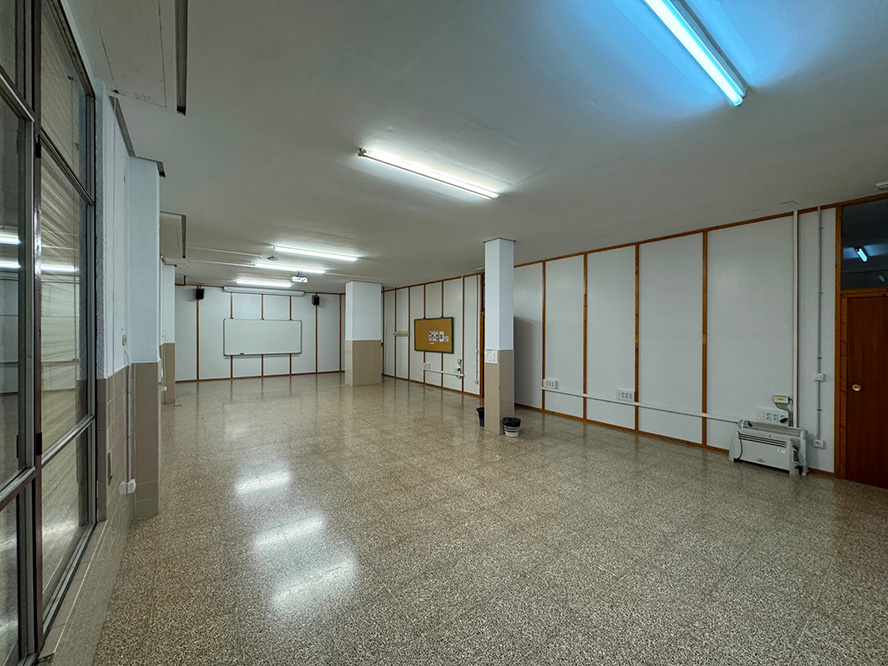
Sagunto City Council has given the AFACAM Alzheimer's association two classrooms in its own building to expand care for people with Alzheimer's and other dementias across Camp de Morvedre, after relocating the education classes that used the rooms.
The two classrooms are in the same building that already houses AFACAM (the Association of Family Members of People with Alzheimer's and Other Dementias of Camp de Morvedre). Until now, the city's Education department used the rooms for after-school support classes, Spanish and Valencian courses for foreign residents, and activities run by the Escuela de Personas Adultas (adult education school, EPA). The council has moved those activities to other municipal buildings, freeing up the space for the association. Although it is Sagunto City Council that is ceding the space, AFACAM's own name spells out that its remit covers the whole of Camp de Morvedre (the district), so the extra classrooms also benefit caregiving families from other towns in the district who rely on its services.
The councillor for Social Services, Nuria Carbó, said the move answers a request the association had been making for years, made possible by coordination between the Social Services and Education departments. According to Carbó, the extra space will let AFACAM improve both the quality of its service and the day-to-day experience of the people who use its facilities.
AFACAM was founded in 2003 as a non-profit organisation, set up by a group of relatives of Alzheimer's patients who, at the time, could not find resources aimed specifically at this group anywhere in the district. More than two decades later, the association still runs five lines of work. The first is the Unidad de Estimulación y Respiro Familiar, a day centre that combines cognitive stimulation therapy for people affected by the disease with respite hours for the relatives who care for them. Its psychological guidance service offers individual and family counselling to cope with the emotional strain of living with a neurodegenerative illness, while its social guidance service helps families process public aid and paperwork linked to dependency status. On top of that come the mutual-support and self-help groups, where caregiving families themselves share experiences and coping strategies, and a training and outreach line aimed at both families and the wider public. The two newly ceded classrooms will reinforce exactly these five lines of work, which until now had to make do with the limited space of the original building.
The classrooms are not the only support the council has given the association recently. City Hall says it has also paid for repairs to AFACAM's premises and for a new entrance door, both funded with public money. On top of that, the municipal subsidy the association receives has grown steadily in recent years, with the stated aim of giving it more resources to expand its reach among families across Camp de Morvedre.
For families in Sagunto and the rest of the district living with Alzheimer's or other neurodegenerative diseases, the extra space means greater capacity for direct care without having to travel outside the municipality. Carbó stressed that the association has spent more than twenty years providing what she considers an essential service for these families, a track record that lines up with the association's own account of its founding in 2003. Anyone wanting more detail on how each of these services works can check the association's own website, cmafacam.com.
According to El Periódico de Aquí and Sagunto City Council, with additional background from AFACAM.