Lydia Bosch and Julio Peña star in 'Fedra' at Sagunto's Roman Theatre
The 43rd edition of Sagunt a Escena (Sagunto's summer theatre festival) will stage 'Fedra, en los infiernos' on 20 August at 22:30 in the Roman Theatre, starring Lydia Bosch and Julio Peña.
Sagunto is in the closing stretch of the 43rd edition of Sagunt a Escena this week, the summer festival that combines a major ticketed production with free street theatre every year. Between Wednesday and Thursday, three events sum up that dual character well: one big show in a historic venue and two street performances aimed at all audiences.
The main event arrives on Thursday, 20 August, at 22:30, when the Teatro Romano (Roman Theatre) hosts 'Fedra, en los infiernos'. Lydia Bosch leads the cast in the title role, alongside Julio Peña as Hipólito, under the direction of José María del Castillo, who also wrote the original script that reinterprets the classical myth through a contemporary lens.
The story brings Fedra back after she strikes a deal with the Moirai, the goddesses of fate, allowing her to rebuild her own account and search for the peace she never found in life, a life marked by a desire for her stepson that she could not control. Overwhelming passions, forbidden longings, moral condemnation and guilt that turns into sin run through the whole production.
Few in the audience will recall exactly where the title character comes from. Fedra belongs to one of the most-cited stories in Greek mythology: according to Wikipedia, she was a Cretan princess, daughter of Minos and Pasífae, married to Teseo (Theseus). Her passion for Hipólito, her husband's son from an earlier marriage, ended in rejection and, later, in a false accusation against the young man before her own husband, with tragic consequences for both. That mythological starting point is exactly what the version premiering in Sagunto picks up, with Fedra, already dead, trying to rewrite her own story.
The Teatro Romano itself holds a lesser-known episode outside specialist circles. What visitors see today as the venue is not the Roman-era building preserved intact, but a reconstruction carried out between 1990 and 1994 by Giorgio Grassi and Manuel Portaceli, criticised from the very start for effectively building a new theatre on top of the ancient ruins. The dispute even reached the courts: the Tribunal Superior de Justicia de la Comunitat Valenciana (the region's highest court) eventually ruled the intervention illegal, finding that it concealed the original remains in breach of heritage protection rules. Decades later, that same venue, with its own judicial past, will host a play centred precisely on judgment, guilt and fate.
Interest in this year's festival was already visible before the programme even began: days ahead of its opening, organisers confirmed an expanded capacity of 804 seats, up from the 608 available in the previous two editions, though still short of the 1,200 the festival drew in 2023. That figure gives a sense of the scale Sagunt a Escena still holds within the district's summer cultural calendar.
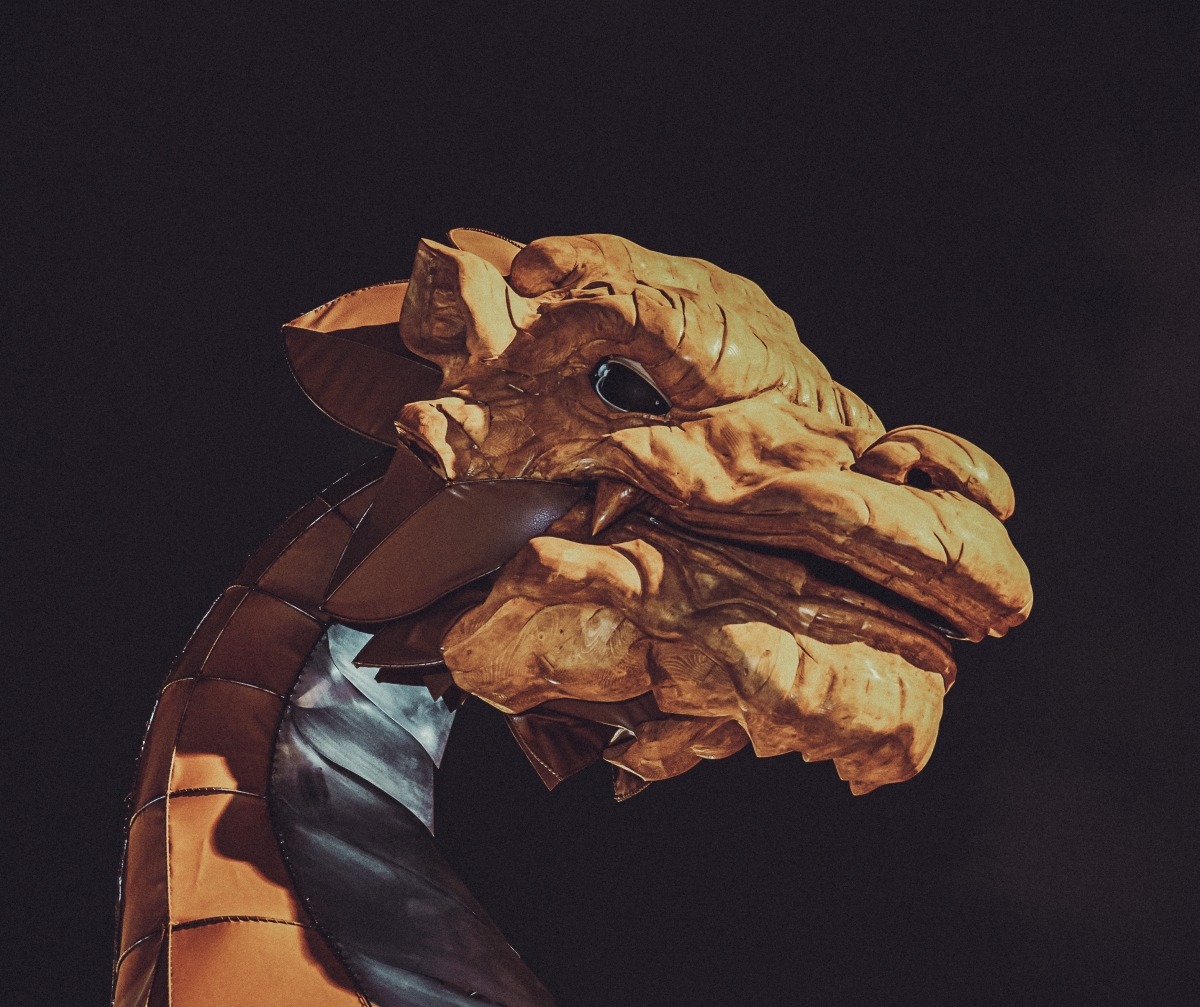
Before 'Fedra' takes the stage, the Alameda de Sagunto (a central boulevard) hosts the other big free draw of the Off Romà strand this Wednesday at 21:00: 'Quimera'. La Fam, a company from Castellón, brings a six-metre-tall, twelve-metre-long articulated figure weighing close to 1,500 kilograms, built from iron, wood and leather, to this street parade; four performers operate it as it moves through the streets in a show inspired by legendary imagery.
On Thursday at 22:00, the Casa de Cultura de Sagunto (Sagunto's culture centre) adds its own Off Romà date with 'Princeses, cavallers i dracs' ('Princesses, Knights and Dragons'), a production by Bramant Teatre together with Escalante Centre Teatral. It all starts with a school museum visit that ends in an incident, a drink thrown at a painting of Saint George defeating the dragon, which gives Jerónimo Cornelles, the piece's writer and director, a starting point to think aloud about the prejudices attached to adolescence, blending text, image, music and movement.
Anyone hoping to catch all three shows will need to plan ahead: 'Quimera' is only on this Wednesday evening, while 'Fedra, en los infiernos' and 'Princeses, cavallers i dracs' both take place on Thursday at two different spots in the city, the Alameda and the Casa de Cultura versus the Roman Theatre. For audiences in Sagunto and the rest of Camp de Morvedre, this mix of a ticketed headline show and free street performances open to anyone captures the balance the festival aims for every summer.
According to Valencia Plaza: Sagunto, with additional background from Wikipedia on the Roman Theatre of Sagunto and the myth of Phaedra.