Sandra Monfort brings her tribute to Valencian folk music to the Roman Theatre
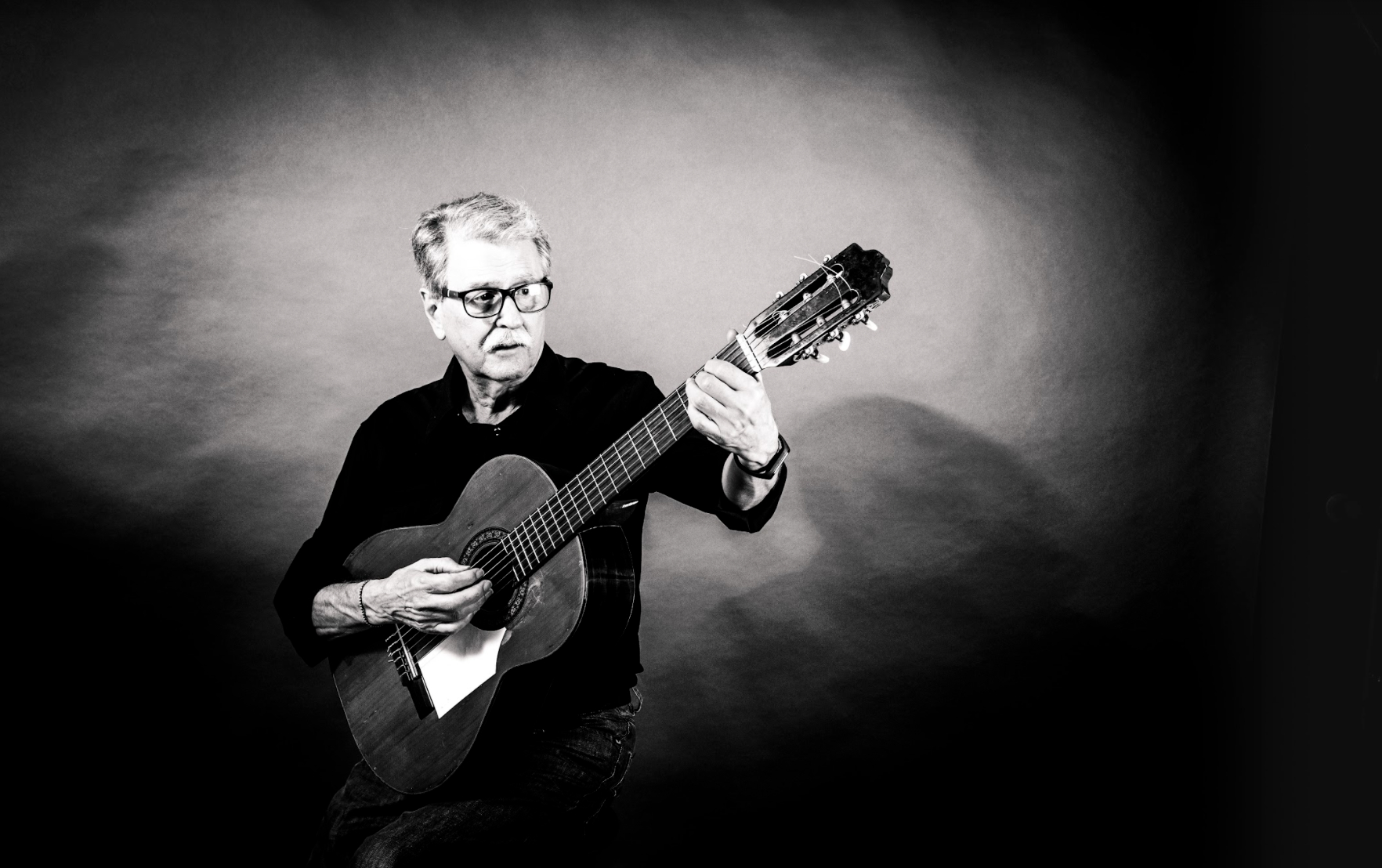
Singer Sandra Monfort presents her show 'Terra de Guapes' this Saturday, 15 August, at the Roman Theatre in Sagunto, a tribute inspired by the Fonoteca de Materials, the school archive that rescued Valencian folklore in the 1980s.
The Roman Theatre in Sagunto (an ancient amphitheatre that hosts the city's main summer festival) will host the full staging of 'Terra de Guapes' this Saturday, as part of the Sagunt a Escena festival. The show is how singer and composer Sandra Monfort (born in Pedreguer, 1992) pays tribute to a sound archive that shaped her musical career: the Fonoteca de Materials. The performance is scheduled for 22.30h and forms part of the festival's 43rd edition, which has grown over more than three decades with the Roman Theatre as its main venue and is organised by the Institut Valencià de Cultura (IVC, the regional cultural institute).
This year's Sagunt a Escena programme also includes the OFF-Romà cycle, a set of free street-theatre performances staged at different spots around Sagunto, designed to bring the festival to audiences who do not always make it to the Roman venue.
Before the full premiere, Monfort personally invited Vicent Torrent, the driving force behind the Fonoteca de Materials and a historic member of the folk group Al Tall, to attend an earlier preview of the show. Afterwards, Torrent approached to congratulate her, and she replied that she makes music because of the work he put into rescuing that archive. The story sums up the thread running through the whole project: an artist from today's generation turning a documentary archive built four decades ago into stage material.
Monfort, born in Pedreguer, has built her career through both group and solo projects: with the trio Marala she won a Premi Ovidi Montllor and an Enderrock Balear award for her 2020 debut album, and her 2021 solo record 'Niño reptil ángel' earned her two Premis Carles Santos. That track record explains why her reunion with Torrent, four decades after the Fonoteca began, carries extra symbolic weight for audiences who follow her career.
The Fonoteca de Materials began in the mid-1980s, when Torrent, then a schoolteacher, proposed a school campaign to the Valencian regional government: pupils, teachers and families would record on cassette the songs that elderly people in their villages still remembered. The idea started in a classroom in Benicarló, where Torrent asked his students to visit their grandparents and elderly neighbours to ask what they used to sing and on what occasions. The results exceeded expectations: the children came back with tapes full of songs that did not appear in any printed songbook known at the time.
The school project ran for seven academic years, in two stages: first, students documented who sang what and in what context; later, specialists from the regional education department returned to the same villages to record professionally. The resulting archive holds close to a thousand hours of recordings and around ten thousand songs and instrumental pieces, making it one of the largest traditional-music sound archives in the Valencian Community. Over time, the material has been published as a collection of about thirty volumes, covering entire districts, individual towns or specific traditions.
Jorge García, head of documentation at the IVC, which now holds the archive, says the decades have only increased the value of those early home recordings, despite their limited technical quality: many of the traditions they capture have already disappeared in practice and survive only on tape. Torrent agrees that, without that school campaign, much of that heritage would have vanished without leaving any sound trace, not just as lost songs, but as a specific way of singing that no written score can fully capture.
Sandra Monfort discovered the archive at the age of twenty, while studying classical and contemporary guitar at the Esmuc conservatory in Barcelona, and those recordings ended up shaping her career. In 'Terra de Guapes', she weaves the voices of women recorded decades ago together with her own, combining traditional and contemporary instruments, dance, performance and electronic music in a show structured in four acts. It is not an archaeological reconstruction of old repertoire, but a reinterpretation that turns archive material into a tool for present-day creation.
Alongside the Fonoteca, the IVC also holds other significant sound archives, including recordings by Salvador Seguí and material linked to Manuel Palau, with recordings dating back to the 1950s on unusual formats such as magnetic wire. All of this material has been digitised for preservation and is regularly consulted by researchers. Torrent is now calling for a dedicated, accessible and well-documented repository: for now, the recordings can only be heard, scattered and without much supporting information, on the online sound repository of the Universitat Jaume I (a public university in Castellón). According to valenciaplaza.com, with additional background from the Institut Valencià de Cultura and Wikipedia.