Sagunto demands electrified double track for Teruel rail line
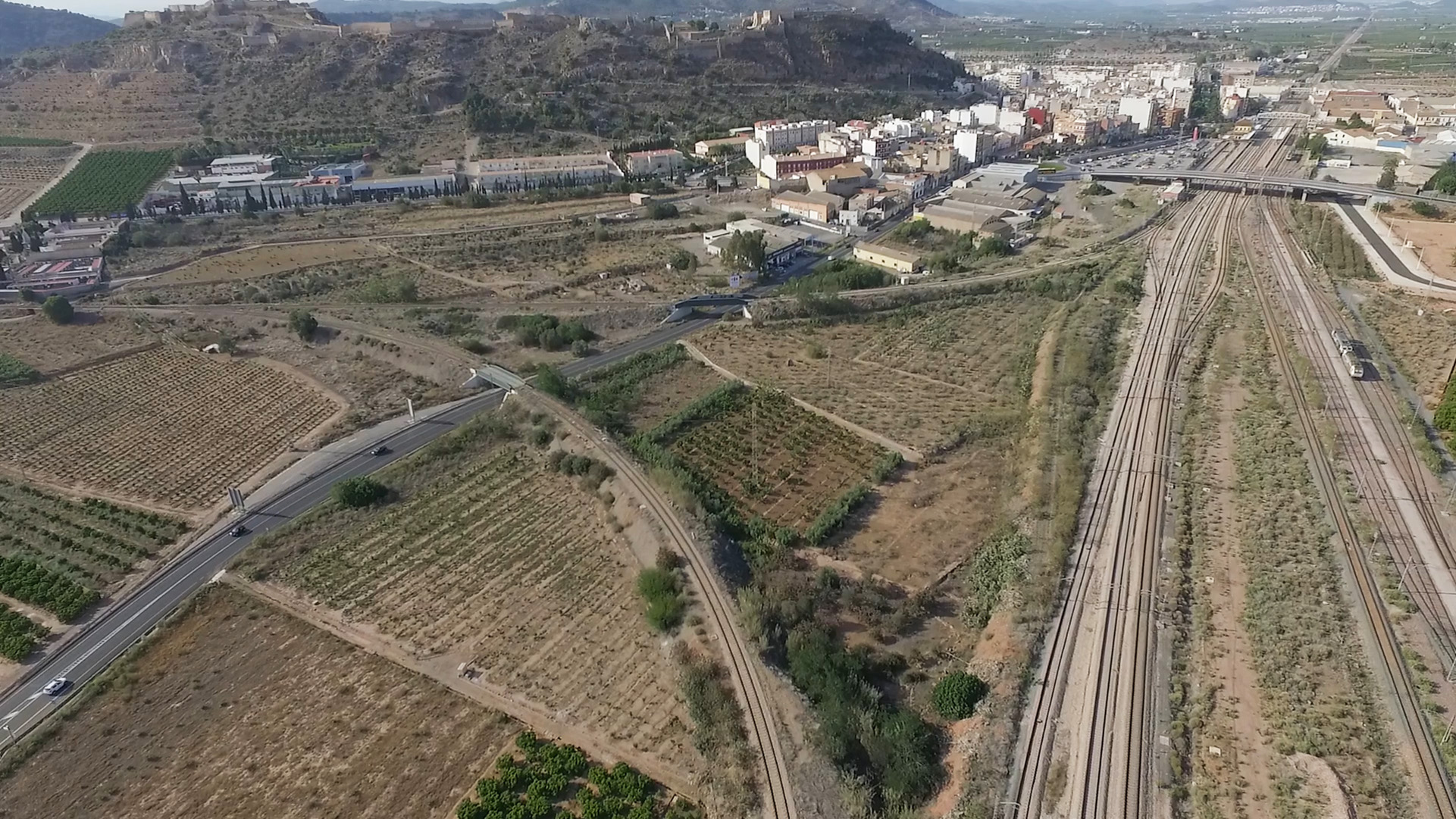
Sagunto's city council will formally object to the Ministry of Transport's plan for a single track between Sagunto and Teruel, after councillors unanimously backed a motion also supported by Aragon's government, the regional Generalitat and the CEV business association.
Sagunto's city council will file formal objections to the government's study for the Sagunto-Teruel rail section of the Cantábrico-Mediterráneo Corridor, a long-distance line meant to connect Spain's northern and eastern coasts. The August plenary session unanimously approved a motion from the People's Party (PP), amended by every other group, instructing the council to demand a double electrified track instead of the single conventional track the Ministry has proposed. Sagunt al dia reported the vote days ago; new details now explain why the council rejects the plan and who else is joining the protest.
Urban Mobility councillor Javier Raro confirmed the government team is already drafting the objections, which will go to the department of Óscar Puente, Spain's Minister of Transport and Sustainable Mobility since November 2023 and former mayor of Valladolid (2015-2023). Objections are due within 45 working days of the study's public consultation, opened in July. The Ministry's study rules out a double track, arguing that projected demand does not justify a cost above €3.7 billion, and instead keeps the existing single conventional track.
That decision breaks with the rest of the corridor. The Cantábrico-Mediterráneo Corridor — designed to link the ports of Santander and Valencia with international-gauge track, 25 kV electrification and the ERTMS signalling system, cutting the Valencia-Bilbao journey to under four hours — is planned with a double electrified track everywhere else. Sagunto-Teruel would be the only exception on the whole line, which has triggered strong pushback. Aragon's regional government called it a "historic mistake"; the Valencian Generalitat, the CEV business federation (Valencia's main employers' association) and the Compromís party, together with Aragon's Chunta Aragonesista, have also announced their own objections.
During the debate, PP spokesperson Sara Cañada argued that Sagunto's industrial and logistics growth needs infrastructure able to handle more freight traffic. Other groups expanded the motion: Roberto Rovira (EU-Unides Podem) asked for a public, phased timetable and a seat for environmental groups on the future working group; Maria Josep Picó (Compromís) recalled a similar council declaration from 2017 and called for a "united front"; Eduardo Márquez (Iniciativa Porteña) demanded investment also cover extending Cercanías commuter trains to Puerto de Sagunto. Vox councillor Alejandro Vila backed the motion but criticised the ruling PSOE for pressing the regional government harder than the national one.
Raro also explained a technical detail: tunnels and overpasses on the current route make simple doubling impossible, so a double track would require an entirely new rail platform, explaining the high cost. He recalled that a 2011 study for a new Sagunto-Zaragoza line stalled after that year's change of municipal government. According to valenciaplaza.com, with additional background from Wikipedia on the Cantábrico-Mediterráneo Corridor and Minister Óscar Puente.