A tour highlights Estivella's most historic houses, in the Camp de Morvedre district
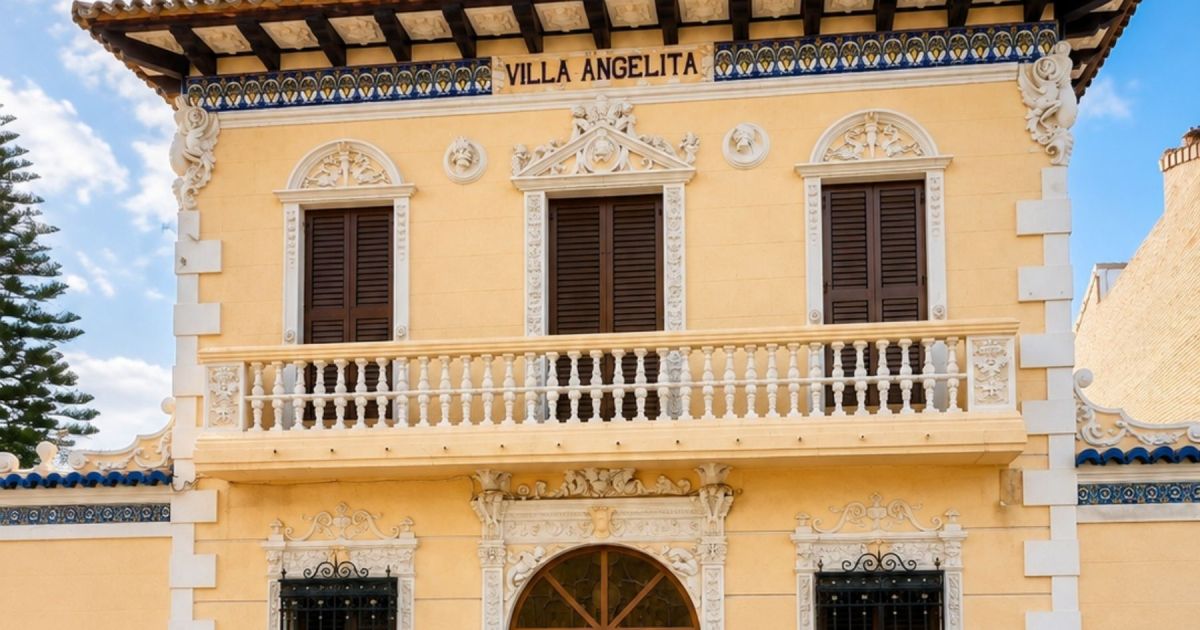
A feature by El Periódico de Aquí tours the most striking houses and façades of Estivella, a village in the Camp de Morvedre district (Sagunto's home region) that was administratively part of Sagunto until 1535.
The Camp de Morvedre, the district that includes Sagunto, has villages with a wealth of popular architecture that rarely gets as much attention as the big monuments. A feature by El Periódico de Aquí tours Estivella, focusing on houses and façades that, without being officially listed as heritage, tell the economic and social history of the town.
The feature notes that Estivella has documented history going back to 1348, and that its first founding charter, dated 16 June 1382, was issued together with those of the nearby hamlets of Beselga and Arenes. The town was also administratively part of Sagunto -then called Morvedre- until 1535, a historical link that explains why many of its old manor houses were tied to tenant managers who administered estates linked to the Sagunto area, according to Wikipedia.
The tour starts on Carrer del Dr. L. Caballero Anadón, where for generations stood the house of the Obrer family, tenant managers from Grau de València (a district of the city of Valencia) who managed manorial estates across three generations. The building, now split into several separate houses, still keeps its traditional proportions, wrought-iron grilles and a harmonious façade, facing the old wall of the Baronia butcher's shop.
In Plaça d'Espanya, formerly Tenda Vella square, stands the Arbiol family house, notable for a brick arch on its walls -an unusual detail in the area- and for the initials "L.S." carved on the door; it is no longer used as a home, though it remains in reasonable condition. Nearby, in today's Plaça de la Constitució -once Plaça Major, still home to the weekly market- the Guillot-Vilanova family house stands out for an 18th-century ceramic-covered balcony that was at risk of disappearing in 2014 and has since been restored by its owners.
The most striking example, though, is the former residence of the Martínez Catalá-Rubio family, on Carrer Josep M. Blasco, on what used to be the baron's orchard. Silk industrialist Vicente Martínez Catalá bought it in 1879 and built a house with a large space for breeding silkworms; the property later passed to his sister-in-law Emilia Rubio, who was married to Federico Ballester, a doctor from Paterna. Estivella's town council has recently acquired the house, which holds significant ethnological heritage and a library that, the feature says, will help reconstruct the life of a silk industrialist and shed light on the region's silk-making history.
The tour closes with early-20th-century summer houses, such as the Hurtado house, with bevelled tiles rarely seen elsewhere in the district, and the house of doctor Joaquín Calvo, an example of eclectic style with baroque decoration of fantastical figures. The feature concludes that these lived-in façades, beyond power or religion, preserve each village's identity and deserve protection from the passage of time. According to El Periódico de Aquí, with additional information from Wikipedia.