Camino de Santiago association from Sagunto: 68 pilgrims walk 80 km towards Burgos
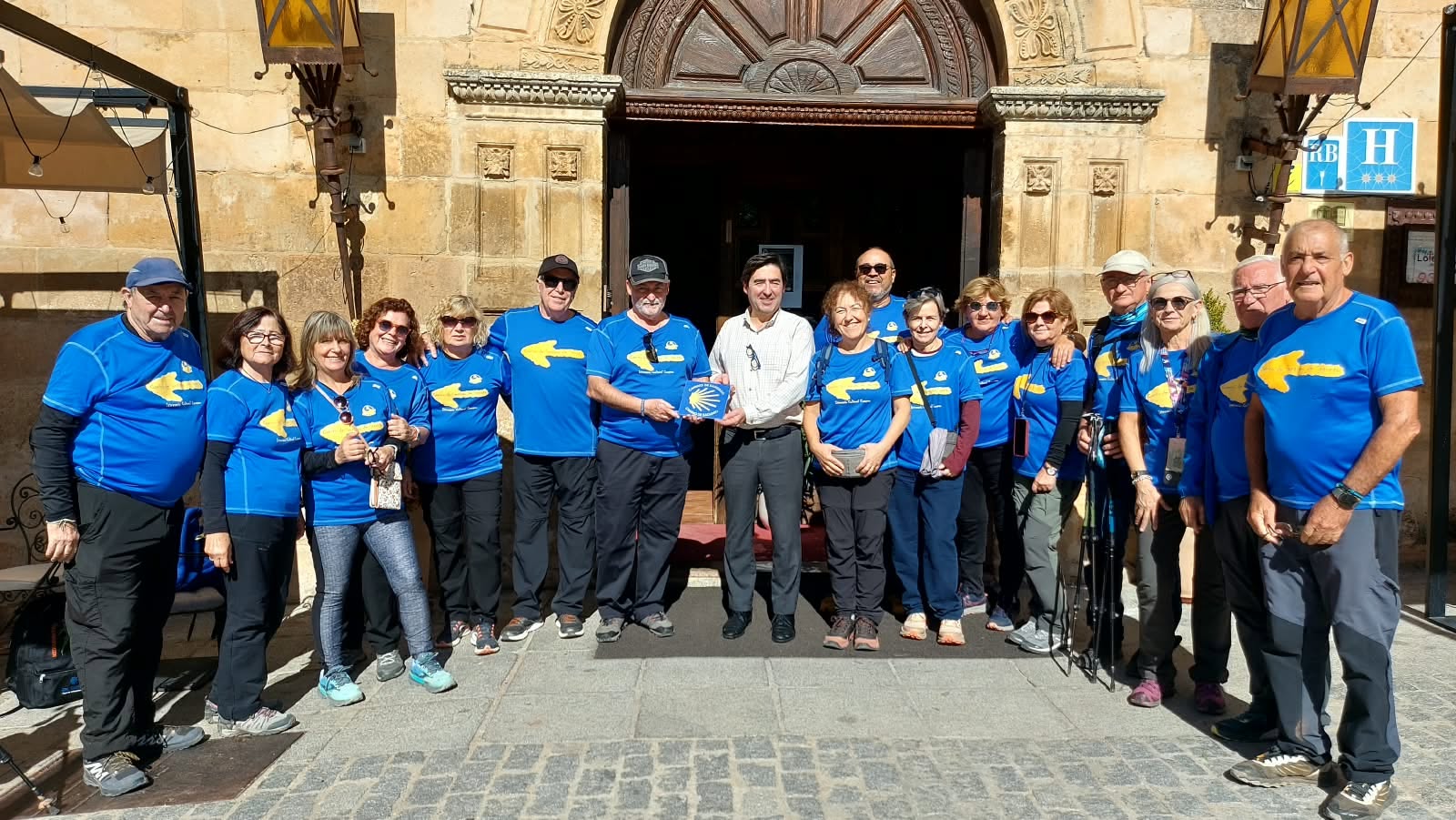
68 pilgrims from the Sagunto Camino de Santiago association walked about 80 km between Soria and Burgos from 9 to 12 October. About 32 km remain to Burgos, where the route joins the Camino Francés.
A group of 68 pilgrims from the Sagunto Friends of the Camino de Santiago association has added four more stages to its route towards Santiago de Compostela. Between 9 and 12 October they covered close to 80 kilometres across the provinces of Soria and Burgos, and about 32 kilometres now separate them from Burgos, where the route joins the Camino Francés (the main French Way).
The walk began at the Ermita de la Virgen Blanca (hermitage), near Navaleno, and ended in Mecerreyes, already in Burgos province. It covered stages 21 to 24 of the Sagunto route. The first, of 18.67 kilometres, linked the hermitage with San Leonardo de Yagüe; the second led to La Gallega, with 19.81. The third was the hardest, 29.40 kilometres between La Gallega and Retuerta via Mamolar and Santo Domingo de Silos. The last, of 11.21 kilometres, passed through Retuerta, Covarrubias and Mecerreyes. The four stages add up to 79.09 kilometres.
The days were not only about hiking. The group visited the Laguna Negra, the Bosque Mágico de la Fuente del Pino, El Burgo de Osma, Santo Domingo de Silos, the Río Lobos Canyon and Covarrubias.
There was preparation behind it. Weeks earlier, the association's signposting team travelled to the area to check and reinforce the waymarks and put up new signposts, and the group prepared posters for each stage with distances, elevation changes, difficulty, estimated times, places of interest and advice for pilgrims.
The route predates the association. According to Wikipedia, the Camino de Santiago de Puerto de Sagunto (Puerto de Sagunto is the coastal district) is attributed to Italian pilgrims who arrived through the port of Sagunto, and its origin supposedly goes back to the 13th century. In 2012 the writer and researcher Luis Miguel Bona recovered, signposted and documented the trail. The same encyclopedia describes it as 394.89 kilometres in 17 stages from Puerto de Sagunto to Tozalmoro, continuing through Soria and Burgos to Mamolar to join the Camino Francés.
The association uses its own count. According to valenciabonita.es in March 2025, the Asociación Cultural de Amigos del Camino de Santiago Sagunto-Burgos was founded in 2022 and joined the Spanish Federation of Associations of Friends of the Camino de Santiago at the start of that month. That article gave 588.07 kilometres on foot in 22 stages (12 by bike) through six provinces to Burgos. The numbering of these latest days, 21 to 24, does not match that count of 22 stages, and the original source does not explain the difference.
The first stage took place on 23 April 2023, two days after the project was publicly presented, on the 21st at 19:00, at the Centro Cultural Mario Monreal (cultural centre). Valencia Plaza reported then that the 22.3 kilometres between the Ancla roundabout in Puerto de Sagunto and Torres Torres would be walked on Sunday 23 April, starting at 7:30, in a project run by the association with Sagunto City Council, and that registration cost 5 euros, including the pilgrim credential and the bus back. Today's source places the start of the project about two years ago, at kilometre zero at that roundabout, and notes that the original idea only went as far as Teruel.
Looking to 2027, the association is already planning the next stages and takes part in the project El Bordón, planned for the Jacobean Holy Year. The idea is that several associations walk their own routes from their places of origin and meet in Burgos to continue together to Santiago in June. A Jacobean Holy Year is held when 25 July, the feast of Saint James, falls on a Sunday; the 2027 one follows 2021-2022 and precedes 2032.
According to El Periódico de Aquí, with data from Wikipedia, valenciabonita.es and valenciaplaza.com.