Firefighters shore up a building in Sagunto after works damage three pillars
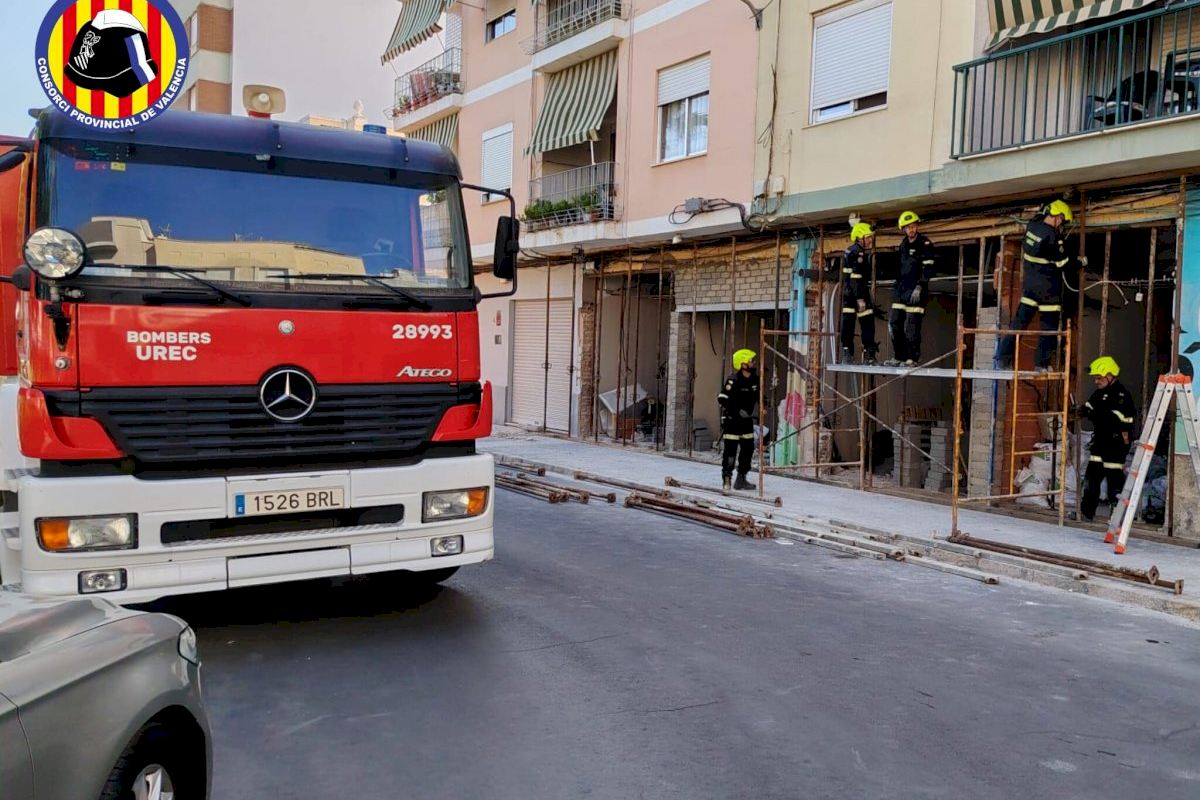
Firefighters had to shore up two properties on Calle Luis Vives, in Sagunto, on Thursday after construction work on ground-floor shops damaged three pillars of the building.
A scare caused by building work led to an urgent call-out for firefighters in Sagunto on Thursday. According to the Consorcio Provincial (the provincial fire service), two properties on Calle Luis Vives were damaged by work being carried out in ground-floor commercial units, forcing crews to shore up the façade to prevent a structural risk.
The call came in at 12.10 pm. A crew from Sagunto's fire station was sent to the scene, made up of officers and a sergeant, together with the UREC unit (Unidad de Rescate en Emergencias y Catástrofes, a specialist rescue team for emergencies and disasters) trained in shoring and stabilising damaged structures.
According to information from the fire service itself, the works had affected three pillars of the buildings, putting part of the structure's stability at risk. Shoring is a standard precaution in this kind of incident: temporary props and supports are put in place to hold the structure while the damage is assessed and a decision is made on whether larger repair works are needed. The props used in this kind of work are usually adjustable metal supports, which carry the load of the structure while the final repairs are carried out. How long they stay in place depends on how serious the damage is: it can be a matter of days for a simple reinforcement, or several weeks if repairing the pillar involves more complex work.
In Spain, when building work damages structural parts of a property, the usual next step after the fire service's emergency response is for an architect or building surveyor to write a technical report setting out the real extent of the damage and the repairs needed. That report is normally what determines whether the shoring stays in place temporarily or whether permanent reinforcement work is required before any access restrictions are lifted.
The Consorcio Provincial de Bomberos de Valencia (the Valencia Provincial Fire Consortium), which coordinated the response, is not a Sagunto-only service — it is a public body covering fire prevention, firefighting and rescue work across the whole province of Valencia. Deploying a specialist team like UREC for an incident like this shows the level of resources activated even when no one is hurt. UREC does not only handle shoring jobs: it is the same specialist unit the Consorcio deploys for rescues after flooding or heavy-rain events such as a DANA (a severe autumn storm system common in eastern Spain), which shows how versatile its crews are across different types of emergency.
So far, no injuries or evacuations have been reported, though incidents like this often mean temporary access restrictions to the affected ground-floor units while shoring work is finished and the building's safety is reviewed. It is not yet known which company was carrying out the works that caused the damage, or whether Sagunto City Council has opened any review linked to the building permit. Cases like this are also a reminder for residents of older buildings to watch for warning signs — cracks, damp patches or uneven floors — before nearby building work makes an existing structural problem worse, and to report them promptly to the residents' association or the City Council.
Cases like this highlight why work on ground-floor shops and units inside residential buildings needs proper technical oversight, especially when it affects structural elements such as pillars or load-bearing walls — damage to these can threaten the safety of the whole building, not just the unit under renovation.
According to elperiodic.com, with additional information from bombersdv.es on the provincial scope of the Consorcio Provincial de Bomberos de Valencia.